
Follow the Money: The Underdog vs. the Bike Path
PUBLIC ACCOUNTABILITY - Years ago, I was shooting ringside as a boxing photographer when I noticed Sylvester Stallone standing beside me, shouting encouragement to a fighter who was getting beaten badly. “Hit him first! Hit him first! You got this!”
After the fight, I asked Stallone if he knew the boxer or had something riding on the outcome. “No,” he said, laughing. “I always support the underdog.”
I remembered that line recently because, after nearly a decade, I am still fighting over what began as a bike path. More precisely, I am fighting over what the City of Los Angeles calls the Los Angeles RiverWay San Fernando Valley Completion Project — approximately 2.93 miles of bicycle and pedestrian improvements between Vanalden Avenue and Balboa Boulevard through the Sepulveda Basin.
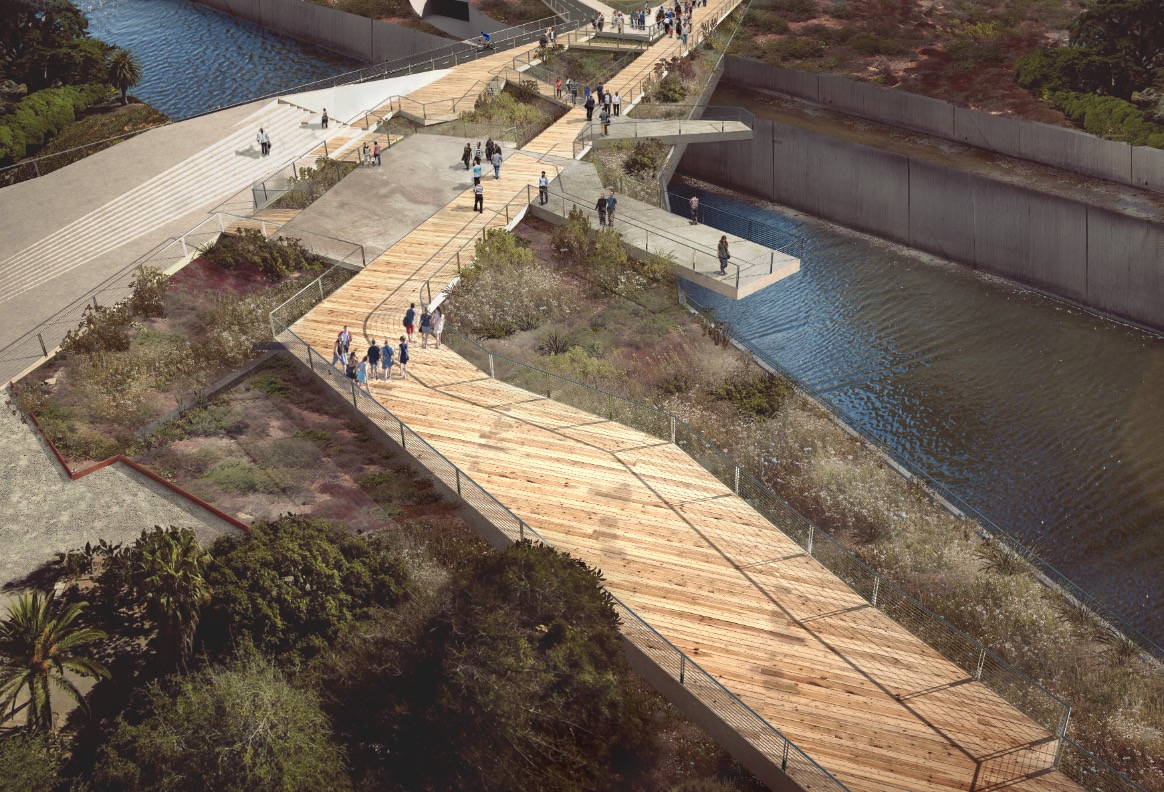
I am not anti-bike. A safe, continuous RiverWay through Los Angeles is a good idea. But taxpayers should still be able to ask a basic question: How did less than three miles of bike and pedestrian improvements become a project approaching $100 million, while five major undercrossings once included in the plan were pushed into the future?
That is where this stops being just a bike-path story and becomes a public-accountability story.
From $50 Million to Nearly $100 Million
In May 2025, the City estimated construction at approximately $50.5 million. Then the bids came in. ECI bid about $89.9 million. Griffith Company bid about $109.6 million. The City rejected the bids and rebid the project.
By February 2026, the City’s own estimate had climbed to approximately $98.7 million — nearly double its estimate less than a year earlier. On the rebid, Griffith came in at approximately $92.5 million. ECI bid approximately $103.6 million.
The number that should get everyone’s attention, however, is not merely what the contractors bid. It is the City’s own estimate. It went from roughly $50.5 million to $98.7 million.
At the same time, the project changed. The original plan included grade-separated undercrossings at Wilbur Avenue, Reseda Boulevard, Victory Boulevard, Lindley Avenue and White Oak Avenue. Those five undercrossings are no longer part of the current construction phase. They have been replaced with signalized, at-grade crossings.
The current construction budget is approximately $95.4 million. So taxpayers are looking at a project that is costing dramatically more while delivering less than originally envisioned.
And the deferred undercrossings have not magically disappeared. They have simply been moved into the future.
Who Pays for the Future?
The California Transportation Commission approved the scope change replacing the five undercrossings with signalized crossings, and Metro supported the revised project. But questions remain about how the project is being financed.
The Bureau of Engineering has said City leadership and Metro were discussing “out-year cash flow,” including the possibility of directing additional Measure M money into the project. That raises another straightforward question: Is future transportation money being pulled forward, borrowed, bonded or otherwise financed to complete today’s project? And if so, what interest or financing costs will ultimately be paid by taxpayers?
I have not found a project-specific answer. That is exactly the problem. Before City officials tell the public what this project costs, the public should know whether the quoted price includes the full cost of financing it.
The Warning Signs Are Not New
These concerns did not suddenly appear when the construction estimate approached $100 million.
Back in 2017, a Bureau of Engineering presentation put the possible cost of the much larger RiverWay project — roughly 13 miles — at as much as $150 million. At the time, only about $60 million in funding had been identified.
By 2018, officials were already asking who would maintain the project and who would enforce rules along it. Questions were raised about LAPD patrols, maintenance agreements and homeless encampments potentially blocking tunnels or undercrossings.
In 2020, the L.A. River Walkers and Watchers were still asking the same basic question: Who is responsible for maintaining and securing the River bike path?
By 2024, Segments 1 and 2 were facing an approximately $17 million funding shortfall. The Municipal Facilities Committee allowed the project to move forward but imposed conditions. Among them: identify future funding, provide a cash-flow plan, identify front funding, address stormwater requirements and provide a maintenance plan.
Since then, the construction budget has risen to approximately $95 million, five undercrossings have been removed from the current phase, additional funding is still being discussed and, in 2026, the maintenance agreement was still described as a draft.
So, what happened to those conditions?
Then There Is the Bidding
The bidding process deserves scrutiny of its own. Griffith Company submitted the apparent low bid at approximately $92.5 million.
The City recommended rejecting Griffith as non-responsive because of issues involving its Business Inclusion Program paperwork and subcontracting calculations. Griffith asked to correct the paperwork. The City declined.
ECI’s bid also contained a numerical error. According to the City’s own report, ECI listed its total bid amount incorrectly. City staff corrected the numbers under applicable bidding rules, notified the company and continued processing the bid.
Those may be legally different kinds of mistakes, but on a public project approaching $100 million, somebody should explain the difference clearly and publicly.
The original article notes that the Board of Public Works was scheduled to consider awarding ECI an approximately $84 million contract for the reduced-scope project.
That makes the question of oversight even more important.
And Then There Is the Dog Park
This is where the story becomes personal for thousands of Valley residents.
The Sepulveda Basin contains numerous recreational facilities. There are baseball fields at Hjelte, Encino, White Oak and Woodley. Franklin Fields alone occupies approximately 28 acres and contains 15 lighted baseball fields. There are also miles of bicycle facilities throughout the Basin.
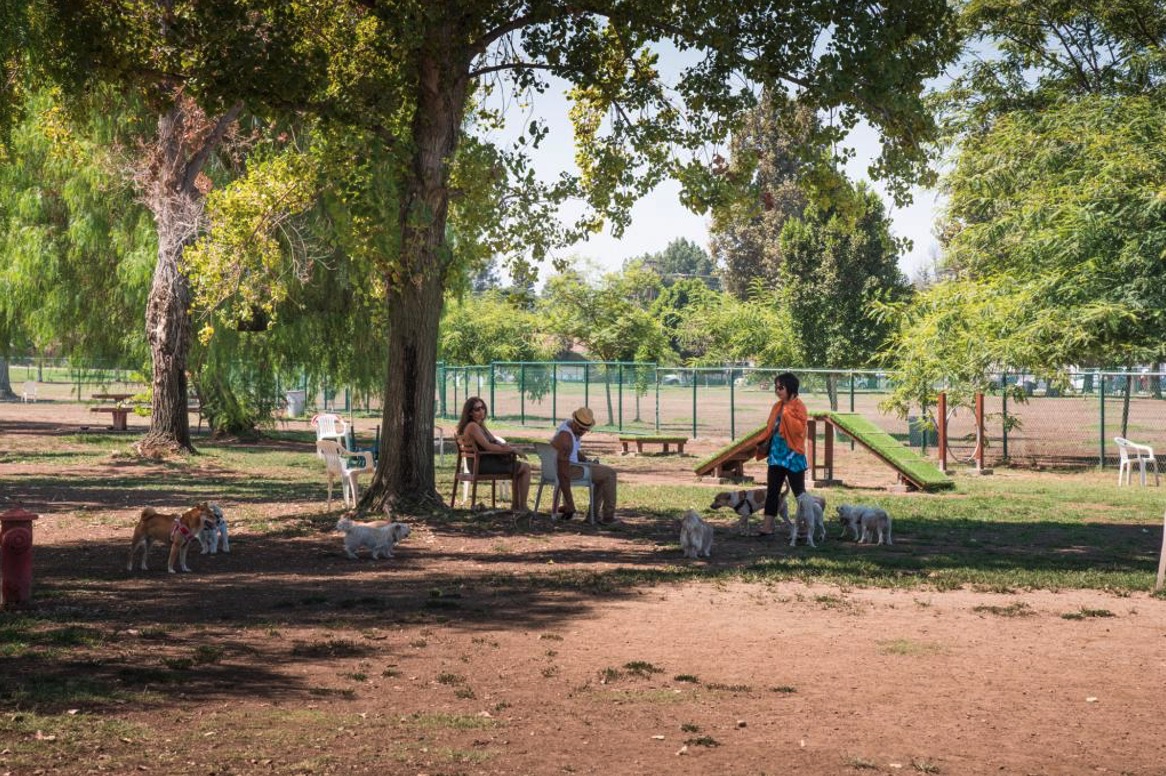
But there is only one Sepulveda Basin Off-Leash Dog Park. It serves residents from three Council districts representing a combined population approaching 800,000.
West of White Oak Avenue, the RiverWay travels along the south side of the Los Angeles River. At White Oak, however, the proposed route crosses to the north side, running directly alongside the dog park before continuing toward Balboa Boulevard.
For years, I have asked a simple question: Why not keep the path on the south side?
The City has never provided what should settle the issue once and for all: a side-by-side analysis comparing the north-side and south-side routes, including cost, engineering constraints, available width, environmental effects and recreational impacts.
People have gone to the site themselves. They have walked it and measured it. And the City’s own Sepulveda Basin Vision Plan now contemplates “White Oak to Balboa LA River Widening” along this same corridor.
If there is enough room to discuss widening the river corridor, it seems reasonable to ask why there supposedly was not enough room for the RiverWay to remain on the south side.
Others Have Asked the Same Question
This concern is not mine alone.
In 2023, the Sepulveda Basin Wildlife Areas Steering Committee questioned the north-side alignment and said it could find “no supportable justification” for moving approximately a mile of the path from the south side to the north.
The committee also noted that the proposed north-side route would run only a few hundred feet from the existing Orange Line bike path along Victory Boulevard and questioned whether existing bicycle connections might provide much of the same transportation function. It also raised concerns about future floodplain and habitat restoration.
Meanwhile, the City’s broader Basin Vision Plan includes still more projects: mobility gateways, bikeways, recreation improvements, shuttle concepts, kayak launches and possible changes affecting the dog park.
The dog park’s future is hardly secure.
Maintenance: The Part Nobody Cuts a Ribbon For
The RiverWay is expected to include roughly 233 lights. The dog park still has none.
The park closes at sundown. During the shorter days of the year, that means many working residents may not get home in time to use it. For apartment dwellers, the dog park is not merely a recreational luxury. It may be the only large, legal place nearby where their dogs can run off leash.
Yet the park continues to struggle with basics: irrigation, bare ground, supplies and routine maintenance. At the same time, a nearly $100 million transportation project is moving forward next door.
That contrast is hard to ignore.
The original article notes that transportation agencies operate with billions of dollars in annual resources, while the dog park reportedly operates on a budget measured in tens of thousands of dollars.
The Dog Park Is the Underdog
This story began with a bike path, but it has become about much more.
A project once estimated at approximately $50 million now carries a construction budget approaching $100 million. Five undercrossings have been deferred. Future funding questions remain. Maintenance responsibilities have taken years to resolve. There are questions surrounding the bidding process.
And after nearly a decade, residents still have not been shown the side-by-side analysis explaining why the RiverWay must cross to the north side of the river beside the Sepulveda Basin dog park.
A dog park should not become invisible simply because the agencies and projects surrounding it have larger budgets. If this community qualifies for public funding in the name of equity, then protecting an existing, free public recreation resource should count as equity, too.
The dog park is open to everyone. There is no team to join, no league fee, no reservation and no membership. It is simply there for the public — at least for now.
Which brings me back to Sylvester Stallone standing beside that boxing ring, shouting encouragement to the fighter everyone else expected to lose.
“I always support the underdog,” he told me.
After nearly a decade of asking questions about this project, I understand exactly what he meant. In this fight, the dog park is the underdog.
And before another dollar is committed, Los Angeles taxpayers deserve some clear answers: Where is the side-by-side analysis of the south-side and north-side routes? Why were five undercrossings deferred after the project attracted substantial additional funding? How much future funding is still required? Is any of it being financed or borrowed? Why are approximately 233 lights planned along the RiverWay while the dog park still closes at sundown?
And most important: Has the City actually demonstrated that this is the only reasonable way to build the project?
You do not have to oppose the bike path to ask the question. You just have to believe taxpayers deserve an answer.
(Miriam Preissel is a Los Angeles community advocate who has spent nearly a decade tracking the Los Angeles RiverWay project, raising questions about public spending, government accountability and the future of the Sepulveda Basin Off-Leash Dog Park.)