
Comments
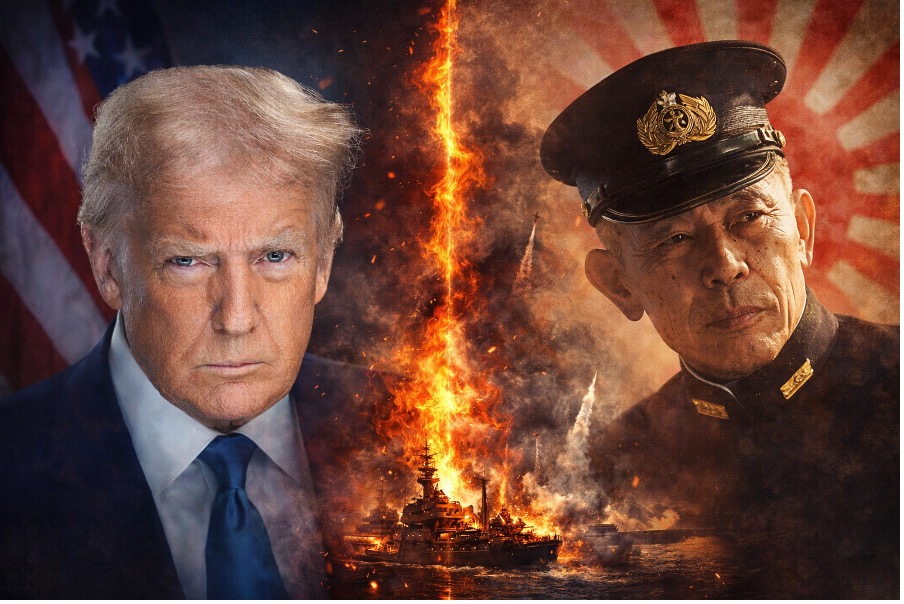
GELFAND’S WORLD - When Admiral Yamamoto was planning attacks on Pearl Harbor and later on Midway, he was under no misconceptions about American capabilities and even seems to have understood that Americans would respond to an attack in an aggressive way. He had lived in the United States and understood its ability to produce oil, steel, and food for a war machine. He understood that the U.S. could, if it chose, retaliate by turning its manufacturing into a war machine the likes of which the world had never seen.
He was, of course, correct, as the history of WWII shows.
In modern day discussion, we might well think of Pearl Harbor as both a military action and simultaneously an act of terrorism. It was terrorism in the sense that it had an emotional effect on U.S. citizens from all over the country, even if the effect was quite the opposite of what terrorists usually hope to achieve. If nothing else, the attack created a whole nation of angry people who were all of a sudden willing to put up with wartime rationing, the draft, and the recruitment of the whole population into wartime production.
The lesson is that, at least in some cases, an act of terrorism accomplishes exactly the opposite of what it was originally intended to do. The most dramatic recent lesson is, of course, the attack on Israel from Gaza just a couple of years ago. It was designed to terrify and to horrify, and we may imagine that it did both of those things. But it did not cause Israel to back off, or to sue for piece. Rather, it resulted in mass destruction of Gaza by Israeli forces.
The discussion here is not intended to be about military capabilities, but about the emotional effects of committing an act of terror, and how those lessons apply to our recent incursion against Iran. This relates to the question of how the original attack came about and how it would ultimately be perceived as a terrorist act against the whole country of Iran by many of its people.
We have been told that Israel and/or the U.S. came into possession of information regarding an upcoming meeting of the Iranian leadership, a meeting that would be targetable by our respective air forces. It was a momentary target of opportunity, and offered the chance to kill the Iranian leader.
Those of a certain generation remember the murder of John Fitzgerald Kennedy and the speculation that this was revenge by some foreign country (presumably Cuba) for attempts to kill its own leadership. Ignoring the speculation about what really happened that day, there was an understanding that the U.S. would not assassinate foreign leaders, at least for a while.
There is also a concern for international law and traditions, which you can read about here. To cite just one element of that discussion:
“Assassinating sovereign leaders has been considered so potentially corrosive of international society that its prohibition has been a foundational pillar of world order since the Treaty of Westphalia (1648).”
The assassination of the entire Iranian leadership has to be recognized as both an act of war and an act of terrorism, since it had both warlike and terroristic goals.
What’s of concern, and the main point of this discussion, is that the Trump administration didn’t seem to understand how people would react when faced with a terroristic act of assassination against their own leaders. And this comes down to the well established observation that Donald Trump is a different sort of person, somebody who thinks that negotiated settlements begin with an act of intimidation or theft or violence. In point of fact, he made it work against contractors in his earlier career in real estate. But that – if only Donald could understand this – was a very different sort of thing. It was just business, and the people he was conning understood that they could accept a small token payment from Trump or be ruined by years of abusive legal fighting.
And that’s a lot different from killing the leaders and children of a far-off country.
If we understand anything about the Iranian culture and its leadership, this is a country that has been willing to accept enormous losses in a war with Iraq, accepts a religious element in its view towards foreign wars, and has the geography to make foreign invaders distinctly unwelcome. Particularly invaders who come by sea.
So here is a regime that can accept substantial losses due to bombing and strafing, that can deal with losses of oil income due to closure of the Persian Gulf, and has a multi-thousand-year history of dealing with and absorbing foreign armies. Iranian leaders can look across the Strait of Hormuz and recognize that the American people will begin to rebel if the closure goes on more than a few more weeks, because we are seeing it at the gas pump right now. The Iranian leadership may be thinking about a conflict going on for the next 8 years (like it was with Iraq) or even the next 40 years.
Donald Trump appears to be laboring under the illusion that if he just threatens and insults long enough and loudly enough, that the other side will fall for his bluff. I think we can all see where this has gone so far.
Trump doesn’t seem to have the mental equipment to understand how other people will react when you kill their fathers and their children. That is exactly what he is showing right now.
There is one other point that follows from the above discussion. Trump tends to see arguments and conflicts as negotiations on the way to deals. At least that’s how he expresses himself about such things. Perhaps Trump figures that Iranian officials will figure out that they are losing money by blocking oil shipments, and that they will eventually come to a settlement. In other words, Trump appears to see the Iranians as exactly like him, which is to say, pretty much amoral.
What Trump is missing is any understanding that the Iranian leadership lives by a religion that is willing to take short term hurt for long term survival.
And we might recall one other part of our shared history. Remember the hostage crisis? You might remember that the Iranians only returned the American hostages after Jimmy Carter was out of office. That suggests that they too understand sadism and revenge. Suppose they were to keep the Strait closed just through the beginning of November, 2026, which would result in gasoline prices staying high until the next national election?
(Bob Gelfand writes on science, culture, and politics for CityWatch. He can be reached at [email protected])