

A War Against Children Cannot Be a Christian War
MY VIEWPOINT - There are moments when political language begins to sound like something older than politics.
A prayer inside the Pentagon recently asked God to bless the “overwhelming violence of action” and to ensure that “every round find its mark.” Scripture was woven into the cadence of military speech, as though divine presence could be made to converge with operational precision.
Defense Secretary Pete Hegseth, speaking within a worship context tied to military life, drew from the Psalms: “I pursued my enemies and overtook them, and did not turn back till they were consumed.” In that setting, the words do not remain safely in the past. They are re-entered as invocation, carried from ancient text into the present tense of state power.
Days later, amid escalating tensions and reported threats on infrastructure in Iran—including bridges, power grids, and a train station—President Donald Trump warned that a “whole civilization will die tonight” if demands were not met.
Taken together, these moments disclose a familiar grammar in American political speech: violence rendered not as tragedy to be constrained, but as necessity to be affirmed. The enemy becomes total, and destruction begins to take on the tone of moral clarity.
This is not without precedent. The Hebrew Bible, as Hegseth made clear, contains narratives in which warfare is narrated in sweeping and uncompromising terms, where divine authorization and collective judgment sit uncomfortably close together. These are not marginal texts. They are part of the scriptural inheritance that has shaped Jewish and Christian moral imagination alike.
Biblical scholar Phyllis Trible once named such passages “texts of terror,” not to dismiss them, but to acknowledge their enduring capacity to unsettle. Read honestly, scripture does not resolve its own tensions. It preserves them.
The question, then, is not whether scripture contains violent imagery. It is what happens when such imagery is carried into the liturgical and political life of the state without sustained theological interpretation.
It is important to recognize that this is not a new problem, nor one Christianity has ever settled. Across its history, the church has developed divergent ways of relating scripture to political authority. In the Constantinian tradition, state power could be understood as participating, however imperfectly, in divine ordering. In the peace churches, by contrast, any such alignment is viewed as a distortion of the gospel’s center.
That disagreement is not peripheral. It is constitutive of Christian political theology.
Hegseth is associated with the Communion of Reformed Evangelical Churches, a global Reformed denomination with churches across multiple continents. Its co-founder, Doug Wilson, has appeared in Pentagon worship contexts. The denomination emphasizes the comprehensive lordship of Christ over public life, while also drawing scrutiny for its conservative moral positions and its proximity to forms of Christian nationalist political theology.
At stake is not simply the presence of scripture in public life, but the interpretive frameworks that authorize its meaning.
The claim that Christ exercises lordship over all of life, including politics and statecraft, is a serious and intellectually coherent Christian position, particularly within Reformed thought. It insists that no sphere is morally neutral, and that even state violence is subject to divine judgment. Yet within that same claim lies a tension: whether appeals to divine sovereignty can meaningfully restrain violence in practice, or whether they risk providing it with a sacral vocabulary in moments of political urgency.
For Christians, these questions inevitably return to Jesus.
In my own formation in a First Baptist church in upstate New York, the moral center of the faith was articulated simply: Jesus as teacher of peace. Even within a conservative theological setting, we were taught to distinguish between the violence narrated in ancient texts and the ethical trajectory of the New Testament, where mercy, enemy-love, and non-retaliation come into focus.
That orientation deepened in later theological study at Colgate Rochester Crozer Divinity School and Emory University’s Candler School of Theology. Across traditions, Jesus remains a decisive figure for moral interpretation, though not in a way that eliminates disagreement.
A reader formed in Orthodox, sacramental, or political-theology traditions would resist reducing Christ to ethical nonviolence. Christ is not reducible to moral injunctions alone. Kingdom ethics does not stand alone. It exists alongside claims about order, protection, covenant, and the tragic burdens of governance in a fallen world.
Even here, however, there is a line that does not move.
In the New Testament, children are not incidental. They are placed at the center. “Let the little children come to me,” Jesus says, refusing the logic of exclusion. More than this, he issues a warning that reverberates across all Christian traditions: “Whoever causes one of these little ones to stumble, it would be better for them to have a great millstone fastened around their neck and to be drowned in the depth of the sea.”
This is not metaphor softened by time. It is moral clarity in its most severe form.
Whatever disagreements persist among Christians about the use of force, about just war, about sovereignty and restraint, there is no tradition within Christianity that affirms the targeting or instrumentalization of children. The protection of the child is not a peripheral ethic. It is a boundary condition of any claim to Christian moral reasoning.
Once children are absorbed into strategy, once their lives are rendered collateral or invisible, the argument is over.
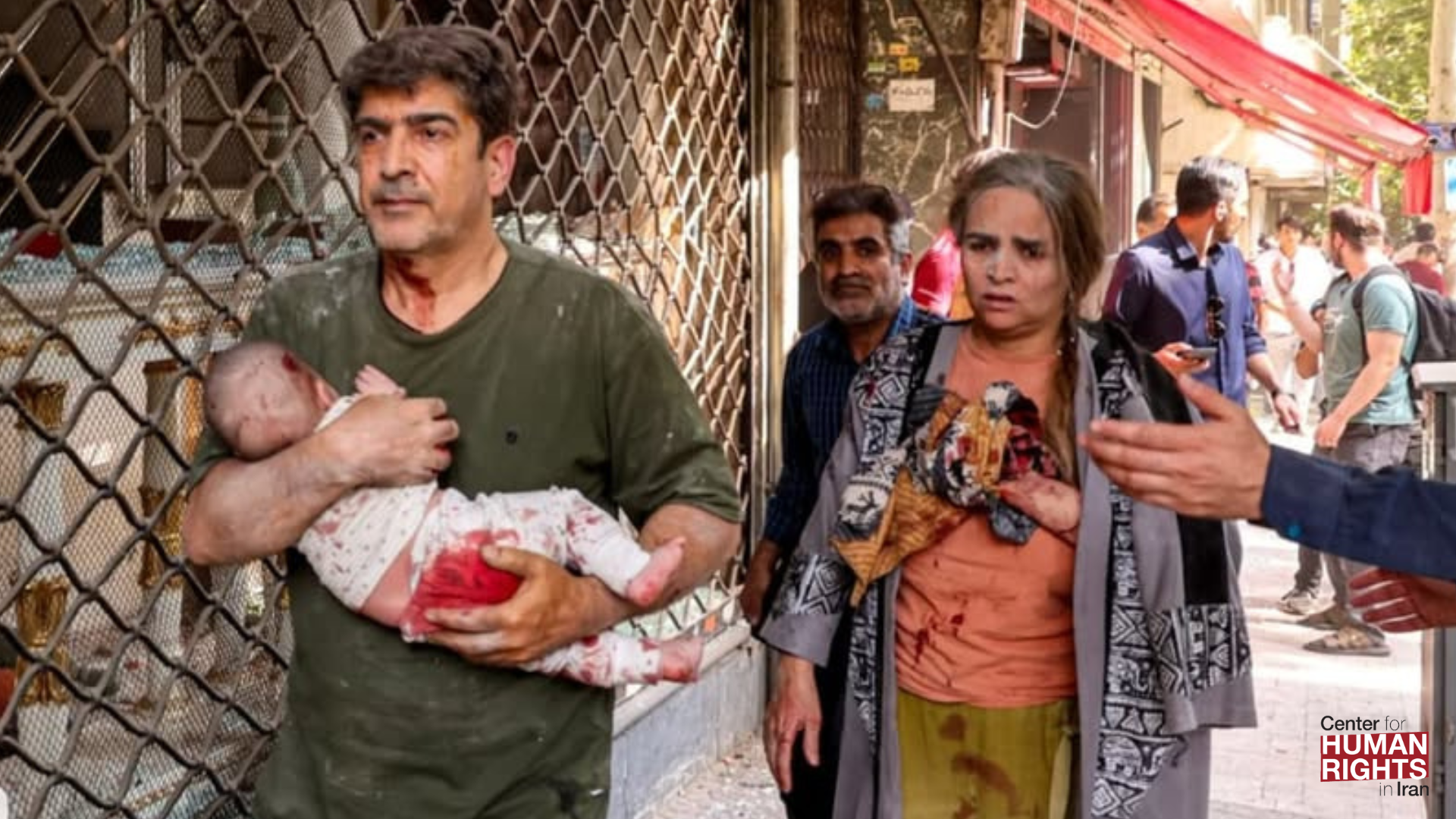
International humanitarian law attempts to preserve this distinction in its own language, drawing lines between combatant and civilian, proportionality and excess. But law depends on moral vision. And moral vision depends, in part, on what cannot be justified.
A war that destroys the conditions of life for children, through bombing infrastructure, collapsing healthcare systems, or rendering entire populations vulnerable to starvation and displacement, cannot be reconciled with the moral universe of the New Testament.
It is not simply a violation of law. It is a contradiction of witness.
A war against children cannot be a Christian war.
And any political theology that cannot say this, without qualification, has already conceded too much.
(George Cassidy Payne is a freelance journalist and philosophy educator based in Rochester, New York. Payne holds advanced degrees in the humanities and writes at the intersection of religion, ethics, politics, and culture. Payne also serves as a 988 Suicide Prevention Counselor and is a community organizer focused on youth empowerment and nonprofit development.)