
The MTA’S Deadbeat Follies
MY P.O.V. - There is waste. There is incompetence. Then there is the chronic stupidity of not wanting to face reality. The problem is that billions and billions of dollars are squandered that way. This is the operational modus of the Los Angeles County Metropolitan Transportation Authority (MTA), an agency that has combined ideological rigidity with metastasizing zeal to make LA’s transportation network a device of collective punishment.
Former Metro CEO Phil Washington (who led the agency from 2015–2021) is frequently cited as the poster child for this mindset. In a widely quoted 2019 statement reported by numerous media outlets and echoed in later critiques, he essentially said: "Los Angeles has made it too easy for cars to get around. Therefore, we need to make it a lot more uncomfortable for drivers so that we can get people back on the buses."
Since then, the MTA has done everything possible to worsen traffic, in the hope that you will abandon your car for public transportation. This is the insanity our politicians embrace in a city ostensibly built for cars. So, any project, however ill-conceived, that interferes with traffic and creates congestion is green-lighted and green-washed with enthusiasm!
The MTA combines massive fiscal irresponsibility, operational decay, and capital megaprojects with delusions of grandeur to set impossible policy goals, while oppressing its workers and bilking taxpayers. So, while everybody is focusing on Governor Hair Gel and his no-track bullet train, you have the most expensive infrastructure buildout policy failure in modern California’s history right here in LA.
Metro was formed in 1993 and, from its earliest years, has not operated as a fare-supported system but as a tax-supported one. From the mid-1990s through the early 2000s, annual operating subsidies averaged roughly $1–1.5 billion (inflation-adjusted). Between 2005 and 2019, that figure rose to approximately $1.5–2.5 billion per year. In the post-2020 period, as farebox recovery collapsed, annual operating support has ranged closer to $2.5–3.5 billion. Using conservative averages — roughly $1.5 billion per year for 1993–2008 (about $22 billion), $2 billion per year for 2009–2020 (about $24 billion), and $3 billion per year for 2021–2024 (about $12 billion).
Metro has required an estimated $55–65+ billion in cumulative operating subsidies since its formation. If fully inflation-adjusted and inclusive of certain grant flows that effectively serve as operating support, the total is likely to exceed $70 billion over the past three decades. Making the bullet trains outlays so far a relative bargain at a meager $16 Billion. Therefore, Metro is a gigantic welfare project for the current crop of managerial incompetents.
Metro is not broken. It is worse than broken. It is structurally unsustainable. That is not a rhetorical flourish. It is arithmetic. In FY24, Metro generated approximately $133 million in passenger fare revenue, while operating expenses totaled approximately $5.9 billion. This means that, when actually paid, Metro fares cover only 2.25% of its expenses.
That means 97.75% of operating costs are covered by taxpayers, primarily through countywide sales taxes approved under Propositions A and C and Measures R and M. To put that into practical terms: a base fare of $1.75 covers only a small fraction of the true cost of a trip. Depending on how overhead and capital depreciation are allocated, taxpayers subsidize roughly $8 to $15 per boarding. Metro reports roughly 300 million annual boardings, but that metric does not distinguish between destination riders and individuals circulating for non-transport purposes.
The agency’s annual budget now ranges from $9.4 to $ 9.5 billion. Long-term planning documents already project cumulative operating and state-of-good-repair gaps exceeding $2 billion by FY30, even before layering in major new capital obligations. Sales tax receipts, which fund most operations and capital commitments, are economically sensitive. Metro has already revised downward sales tax projections by hundreds of millions over multi-year horizons. Fare revenue has not returned to pre-pandemic levels. Ridership remains materially below 2019 benchmarks.
Meanwhile, operating expenses continue to climb due to labor contracts, zero-emission bus mandates, security contracts, and inflationary pressures. When operating costs rise, and user contributions fall, the gap does not close. It is filled by sales tax transfers. Metro’s financial model is therefore not a transit business supported by fares. It is a tax redistribution system supporting transit operations.
That distinction matters because tax revenue is not infinite. It is sensitive to consumer spending, economic cycles, and political tolerance.
Survey data repeatedly show large majorities of riders describing trains as unsafe. Violent incidents, assaults on operators, visible drug use, and erratic behavior have altered public perception. Metro frequently cites year-over-year percentage declines in specific crime categories, probably due to purposeful underreporting. But perception governs discretionary ridership. If families and professionals do not feel secure, they do not ride.
Fare enforcement has weakened. Multiple law enforcement briefings have indicated that a substantial share of violent offenders arrested on the system had not paid fares. The logic is straightforward: when entry barriers weaken, non-destination use increases. When removal thresholds rise in the name of “dignified engagement”, disorder becomes more persistent. Without enforcement, the transit system becomes the wild west, enter at your peril.
This leads to the most uncomfortable yet observable reality: Metro transit vehicles increasingly function as a climate-controlled refuge for large segments of the homeless, drug-addicted, and severely mentally ill populations. They are not staffed, structured, or regulated as shelters. They lack intake processes, case management, behavioral supervision, health oversight, and ineffective rule enforcement.
And now Metro is going to construct a fully enclosed, fully climate-controlled underground train tunnel under the Santa Monica Mountains, at a cost of ~$25 billion in 2023 dollars.
Without laws being enforced and massive cultural changes, it will become the world’s most expensive rolling shelter for the so-called “unhoused” (another marketing word ploy), and the people who might benefit the most will eschew ridership. Looking at the mayoral race, a cultural shift toward a safe city that supports its taxpayers and puts public safety ahead of illegals and criminals is doubtful. As the potential front-runners are Bass and Raman. Therefore, this becomes a public works project for the unions and giant construction conglomerates.
In January 2026, Metro approved the Sepulveda Transit Corridor heavy rail project - “Modified Alternative 5.” The currently secured funding represents roughly 14% of the total project cost. The funding gap exceeds $20 billion. Metro’s own documentation concedes the need for additional federal grants, state appropriations, and debt issuance for the project, meaning taxpayers probably all over the country will be paying for this new shiny homeless shelter for the epidemic of indigents infesting our city. At current farebox ratios, taxpayers will absorb roughly $130+ million in subsidy for the line alone each year. Forever.
Even if ridership projections are achieved, the subsidy per rider would remain substantial. If ridership underperforms as it always does, the annual subsidy burden rises further. This is layered on top of existing multi-billion-dollar operating obligations and projected structural deficits.
The institutional problem is incentive distortion. Through Measures R and M, we created a dedicated sales-tax stream earmarked heavily toward capital expansion. Politicians sit on the Metro board. Construction projects produce ribbon cuttings, union employment, and the illusion of visible progress.
There is no political equivalent of a ribbon-cutting for fare enforcement reform. No groundbreaking ceremony for restoring operating discipline. No photo opportunity for stabilizing state-of-good-repair backlogs. There are no incentives for saving the taxpayers’ money, especially when your job depends on shoveling as much money as humanly possible into any project that can be justified by endless studies where the result has been predetermined.
Even setting safety aside, transit adoption in Los Angeles faces a structural limitation: geography. Los Angeles is polycentric and dispersed. Drivers in the Los Angeles area can reach approximately 54.7 times as many jobs within a 30-minute commute as transit users.
Employment nodes are distributed across arterial grids. Most trips are not origin-to-origin station pairs. The advertised 18-minute Valley-to-Westside trip does not represent total journey time. Commuters must reach the station, wait, possibly transfer, exit, and complete the final mile. If the first mile requires driving and parking, and the last mile requires a 15- to 20-minute walk or unreliable feeder service, the time-savings argument evaporates. Transit fails in Los Angeles, not because trains and buses are inherently slow, but because LA is a very spread-out urban environment.
Metro’s response has increasingly been to embed Vehicle Miles Traveled reduction targets into policy. Success is framed as reducing reliance on single-occupancy vehicles. Surface lanes are reallocated, parking is reduced, and bus-only corridors expand. The assumption is that creating worse traffic induces transit adoption. But behavior in Los Angeles reflects geography, not stubbornness.
Tijuana Did Something to Make Traffic Better!
The comparison with Tijuana is not ideological but a pragmatic demonstration in problem-solving. Facing severe congestion in the industrial corridors and at border crossings, Tijuana constructed an elevated highway to separate through-traffic from surface traffic.
I can attest that the Viaducto Elevado (Sky Highway) is a superb, elevated highway. I have been using a 4-mile stretch of the highway, and it cuts 10 minutes off my commute. It also feels like the first 21st Century Highway I have driven on. Clean, modern, well-marked, well-lit. They even tunneled through a very large foothill to create the connector to Route 1, which connects to the coast road and popular beach towns.
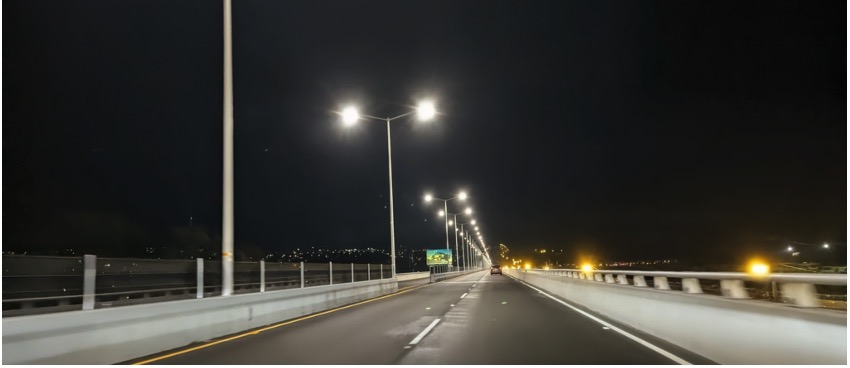
Cost: approximately $1 billion. Built by the Mexican military Defensa division. It took 2 years so far; it is not quite complete, but to my California eyes, it was built at light speed. However, the citizens of Tijuana were unhappy because it was promised to take a little over a year. In Mexico, they love to build things. If the Pacific Palisades fire had happened in Baja Norte, I can assure you every home would have been rebuilt already. But I diverge.
The Sky Highway increased throughput directly. It aligned infrastructure with the dominant travel mode: cars and trucks. It did not attempt to suppress vehicle use. It did not commandeer new land; it built on what it had. Tijuana did something positive to help its citizens and tourists get around town. The MTA would rather spit blood than alleviate traffic and help car commuters. A really bad thing about the MTA's car-hatred is that its policies create additional pollution by deliberately slowing commutes.
Los Angeles proposes to spend roughly 30 times that amount, an optimistic assumption, tunneling under complex geology in an earthquake zone. Even if the Sepulveda Pass Project remains within its current estimate, which California’s megaproject history does not encourage confidence in, the cost differential is staggering. One of the worst parts of the plan is that no one in America makes heavy rail cars anymore, so we will have to import them from China.
Tijuana expanded capacity pragmatically for a billion dollars. Los Angeles prepares to commit $30 billion while operating with 6% fare recovery on its public transit. Every element of Metro’s strategy compounds risk and fragility:
• Low fare recovery
• Weak enforcement
• Safety perception erosion
• Sales tax sensitivity
• Multi-billion-dollar capital commitments reliant on government agencies and sales-tax revenue
• Long-term operating obligations
• If ridership forecasts fall short, subsidy per rider increases.
• If sales tax revenue declines, deficits widen.
• If construction overruns occur, borrowing expands, project gets delayed
• If the lack of enforcement culture remains unchanged, discretionary riders remain reluctant
There is no automatic kill switch. If the model underperforms, we will be stuck subsidizing it forever. Meanwhile, a neighboring border city addressed congestion for one-thirtieth the cost. This is not an argument against transit. It is an argument for common sense and for the efficient use of taxpayers' dollars. No one in their right mind wants to create a $30 billion homeless encampment, except Stephanie Wiggins, the MTA staff, the LA County Supervisors, Mayor Bass, the City Council, Union bosses, and big construction companies. Taxpayers and commuters be damned because “it’s a big club and you ain’t in it.”
(Eliot Cohen has served on the Neighborhood Council for 12 years, served on the Van Nuys Airport Citizens Advisory Council, is on the Board of Homeowners of Encino, and was the president of HOME for over seven years. Eliot retired after a 35-year career on Wall Street. Eliot is a critic of the stinking thinking of the bureaucrats and politicians that run the County, the State, and the City. Eliot and his wife divide their time between L.A. and Baja Norte, Mexico. Eliot is a featured writer for CityWatchLA.com.)