
The Chaplain and the State
IN MEMORIAM - War does not erase moral clarity. It splinters it into acts of courage and impossible choice.
In the bitter cold of the Korean War, Father Emil Kapaun moved through fire and collapsing lines not as a tactician but as a priest who refused to leave anyone behind. He lifted the wounded across broken ground, prayed over men in mud and smoke, and stayed when retreat was ordered. When others were forced into captivity, he went with them rather than abandon those too weak to move.
His name now stands as a symbol of sacrifice. But his life also sits inside a longer, more complicated truth: chaplains have always lived at the edge of war, inside its machinery and yet never fully at home in it. Kapaun’s witness exposes that tension.
Even in industrial war, the human being resists reduction. No system can fully convert a soul into a statistic.
That resistance appears again in another moment that has shaped American memory.
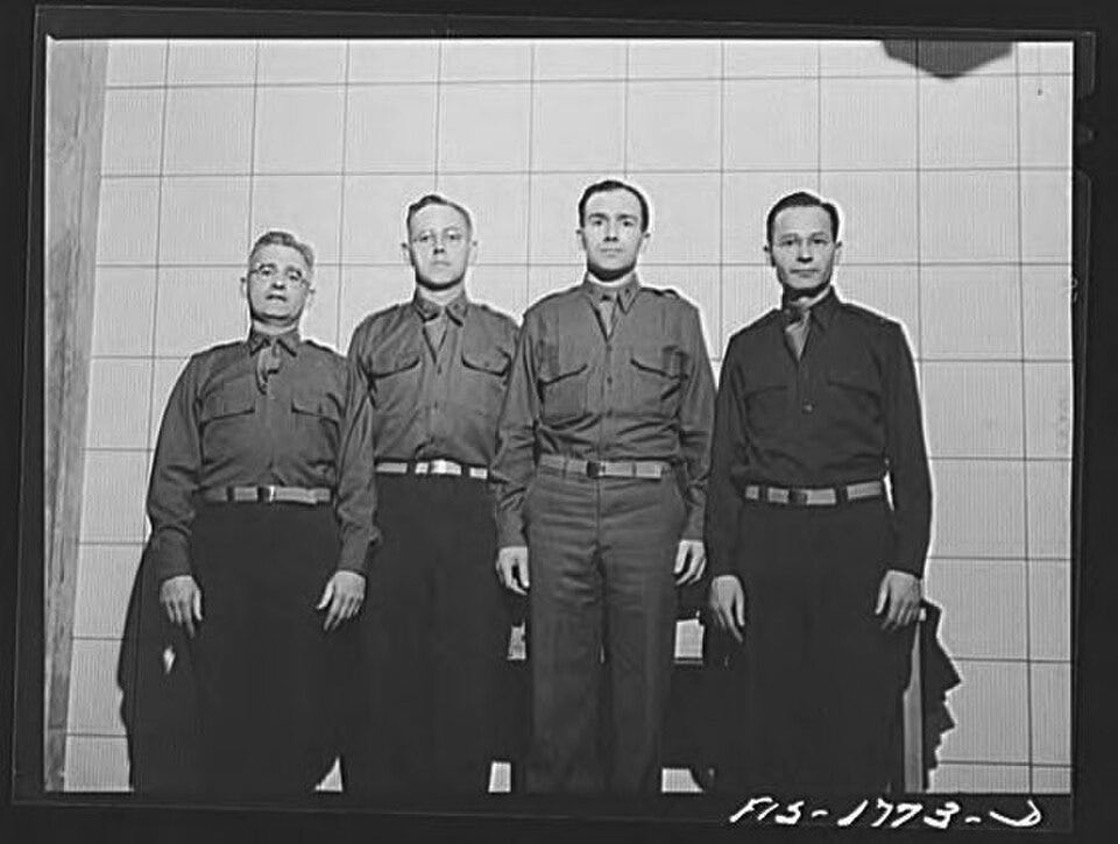
In 1943, the troopship Dorchester was cut open by a German torpedo in the dark Atlantic. Panic spread as the vessel began to sink into freezing water. Four chaplains moved through the chaos: a Catholic priest, a Methodist minister, a Reformed minister, and Rabbi Alexander Goode.
They did not stop the sinking. They did what they could inside the limits of catastrophe. They organized evacuation. They steadied terrified soldiers. When life jackets ran out, they gave away their own.
Survivors later recalled them standing together, arms linked, praying as the ship went down.
The story became a national symbol of unity under pressure. Yet even here, memory is not simple. Over time, the account was shaped by grief, retelling, and national meaning-making. What remains undeniable is not perfect historical precision but the moral claim the story continues to carry: that difference did not disappear in the face of death, and dignity was still offered when survival was no longer guaranteed.
Two decades later in Vietnam, another chaplain moved through a very different moral landscape.
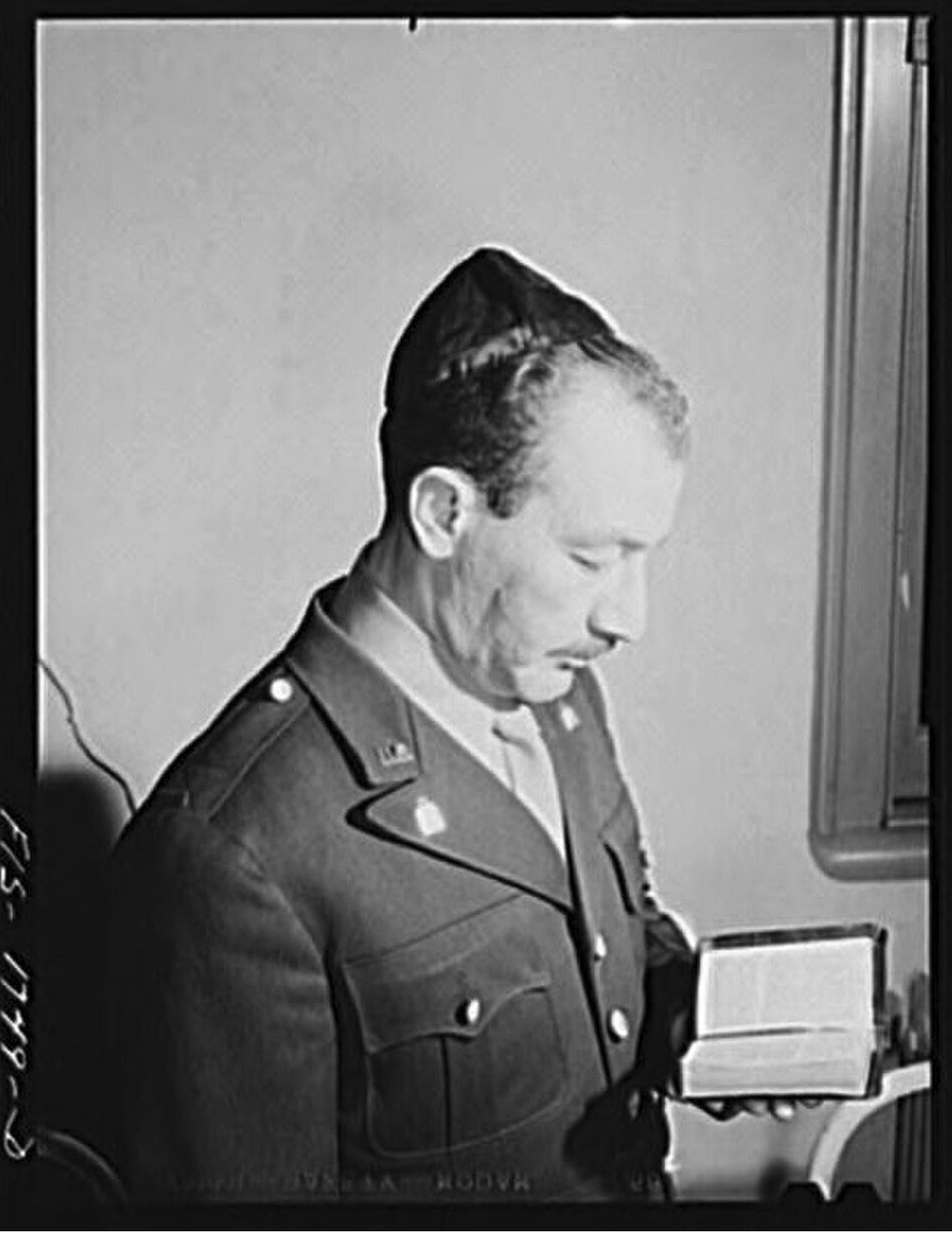
Rabbi Arnold Resnicoff entered a battlefield hospital after an attack, tending to wounded Marines in the aftermath of chaos. A piece of torn camouflage cloth was handed to him by another Marine and shaped into a makeshift yarmulke. A small gesture, improvised in exhaustion, became a sign that even in devastation, religious identity and human dignity still mattered.
The image traveled far beyond that moment. But what it often loses in circulation is the context: prolonged war and the slow reshaping of military care from singular acts of heroism into ongoing systems of trauma response and moral endurance.
Kapaun in Korea. Goode in the Atlantic. Resnicoff in Vietnam.
Three moments often placed in a single line of meaning. But they come from different wars, different institutions, and different expectations of what military chaplaincy is supposed to be.
What binds them is not uniformity but tension.
The tension is simple and unresolved. How does faith speak inside organized violence without being consumed by it?
That question has never stayed still. It shifts with policy, with war itself.
Military chaplaincy in the United States is formally plural. Catholic, Protestant, Jewish, Muslim, and other traditions serve under constitutional protections that prevent any single creed from taking control.
But lived reality is more uneven. Endorsing bodies shape who enters. Command climates shape what is heard. Institutional habits shape what is considered acceptable speech. What looks like a unified system is often a negotiated balance, constantly under revision.
That balance is shifting again.
Recent debates around military chaplaincy, including proposals associated with Secretary Pete Hegseth, emphasize restoring a more explicitly confessional identity to chaplaincy and pulling it away from what some describe as therapeutic dilution. In this framing, chaplains are not primarily wellness providers or morale technicians. They are religious leaders whose authority comes from divine calling.
But calling is not a neutral word.
It does not land the same way across traditions. A Catholic understanding of vocation is not identical to a Baptist one. Jewish understandings of covenant and responsibility carry different weight than Protestant notions of inner calling. Muslim chaplains, Buddhist chaplains, and others bring frameworks that do not collapse neatly into a single vocabulary.
So when the military leans into “divine calling” as a defining phrase, the question is not whether religion belongs in uniform life. It already does. The question is which forms of religion become most legible inside the institution, and which begin to sound secondary- or out of place.
Supporters of reform argue this is a necessary correction, a return to seriousness after decades of bureaucratic and therapeutic language. Critics worry it narrows the moral imagination of chaplaincy, privileging some theological voices while muting others under the weight of institutional preference.
Both concerns point to something real.
Chaplaincy has always carried two responsibilities at once. It offers meaning in suffering, and it helps people endure systems that produce suffering. Those roles overlap, but they are not identical. One speaks toward moral interpretation. The other speaks toward survival.
Tension arises when one side begins to dominate the language of legitimacy.
Catholic moral theology illustrates the complexity. It holds strong traditions of restraint, proportionality, and conscience. It also operates within military structures where those principles are translated into the realities of command and necessity. The result is not separation from the system but continuous negotiation with it.
That is true across traditions. Chaplains do not stand outside the institution. They move within it while trying to preserve something that is not reducible to it.
One proposed change in chaplaincy policy involves removing rank insignia, emphasizing spiritual identity over officer status.
That idea carries two possibilities.
It could strengthen the sense that chaplains are set apart, not fully absorbed into command logic. Or it could reduce their access to the spaces where decisions are made, narrowing their ability to speak into systems at the moment moral questions arise.
The history of chaplaincy depends on this dual position. Inside the system, but not identical to it. Close to power, but not fully owned by it. That ambiguity is the condition that allows chaplaincy to function at all.
If that balance shifts, the question is not whether chaplains remain religious. They will.
The question is what kind of religious speech survives inside the institution.
Moral witness and institutional support have always coexisted within chaplaincy. They are not separate compartments. A single conversation can hold grief and loyalty to unit all at once. But institutions tend to shape which aspect becomes dominant through what they reward and elevate.
The danger is not disappearance of conscience but its narrowing.
Memory often smooths this tension. Kapaun, Goode, and Resnicoff are remembered as if they belong to a single moral lineage, as if their worlds were aligned. They were not. Each lived inside a different structure of war and institutional expectation.
Their greatness comes from persistence inside contradiction.
Kapaun refused abandonment. Goode gave away his own chance at survival so others might have seconds more of life. Resnicoff carried prayer into a field of trauma and improvised meaning from whatever materials were left.
None of them existed to bless war. They existed to insist that even inside it, a human life cannot be reduced to utility.
That insistence has never been guaranteed by institutions. It has always depended on how those institutions are built and changed.
The question facing military chaplaincy now is not whether religion will remain part of its life.
It will.
The question is whether chaplaincy will continue to hold space for moral tension inside violence, or whether that tension will be steadily reorganized into something smoother and easier to manage.
Not less religious. But shaped differently. And history suggests that how that shape is formed will matter more than the language used to describe it.
George is a freelance journalist, poet, and essayist. He writes regularly on community and the moral dimensions of contemporary social issues, drawing on more than two decades of experience in crisis counseling, social work, and education.
He holds advanced degrees from Colgate Rochester Crozer Divinity School and Candler School of Theology, and has taught philosophy at the college level. His background in suicide prevention counseling and nonprofit strategy informs a body of work shaped by attentiveness to suffering, dignity, and the possibilities of human resilience.