
The View from the Balcony: Verdi’s Falstaff
GELFAND’S WORLD - In a previous View from the Balcony, I quoted someone from Los Angeles Opera that what was once a pretty good regional opera company (this is not, I think you can tell, a distinctly positive thing to say) has grown into an international opera company. At the center of this growth has been musical director James Conlon, who will now be leaving this post at the end of 20 years. His final two productions are operas by – not surprisingly – Giuseppe Verdi and Wolfgang Amadeus Mozart. Each of these represents the final opera written by its respective composer: Verdi’s Falstaff has one performance left, on May 10, while Mozart’s The Magic Flute will be coming in a few weeks.
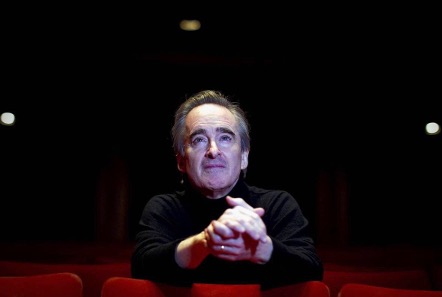 James Conlin
I’d like to insert a brief aside about why these little commentaries came about in a byline that concentrates mostly on local and national politics with the added side topic of science, and sometimes on the intersection of politics and science. There are various reasons, including the fact that CityWatch founder Ken Draper encouraged my doing a cultural beat. Here’s one other thought from a side discussion I had after attending a literary salon a few days ago. At some point, the usual twaddle about the vapidity and superficiality and cutthroat nature of the Los Angeles entertainment industry came up, with the casual acceptance (unstated, as happens so often) that this represents the reality of Los Angeles itself. I of course pointed out that this was always a minor element of Los Angeles commerce and even of its culture and pointed to the local contributions such as the invention of commercial aviation, of deep science, of agriculture, and of being the bridge to eastern culture.
So I am willing to accept that film is the great artistic contribution of the twentieth century, even as we recognize other cultural elements.
How do we decide what is art, and do we need to rank different kinds of art against each other? I think not.
There is the novel and there is the poem, and there is painting. And in a different realm, there are performances of various kinds. There are spoken plays written by playwrights, there are string quartets and symphony orchestras, and there is opera.
Opera holds a special place in all of performance because at its grandest and best, it combines all the other elements – voice and plot and human passion presented live on the stage in colorful abundance. An opera like La Boheme is as tear-jerking as any theatrical tragedy, and it adds music as an equal element. And then of course there was Richard Wagner, who constructed an epic as vast as The Odyssey but did it with music and voices.
So given that opera holds this unique and central role in performance art, it has been worth thinking about, however successful or unsuccessful these Views have been for the reader.
And one little tidbit for those who know Verdi through Aida or La Traviata. Verdi attempted a comedy early in his career that did not do well and made his reputation on tragedies. At the age of 80, fifty years into his career and a national treasure, he went back to operatic comedy, taking a character, Sir John Falstaff, from Shakespeare’s Henry IV and from the Merry Wives of Windsor. At this point, I’d just like to offer you the remarks written by James Conlon himself, as he finds the true worth and majesty of Verdi’s last work. You can read it here.
So Falstaff is a remarkable work written by a master. The rest of our view from the balcony is that the orchestra and conducting were masterful, the singers were all excellent, and the L.A Opera approach of using American-born singers who have trained at least partly in the company’s own program is proving to be a resounding success.
One other reminder: The Magic Flute is coming up. This is the one that includes the ultra-famous aria by the Queen of the Night. And that’s just one of its virtues. Worth going.
Addendum
I missed one of the governor debates to go to Falstaff. I’ve been told that I made the right choice. Here is one thought that goes way back: How can voters make a wise choice when one or two candidates have all the money and get to say their piece hundreds of times using expensive television ads? The idea of limiting campaign funding or converting to full public funding were popular ideas a while back, but the Supreme Court killed them off. The result is that we had Rick Caruso and now Tom Steyer, along with Mahan taking advantage of Caruso’s money. I notice that the voters discounted Caruso’s advertising and voted to defeat him. One question is whether they will do something similar to Steyer on the statewide level.
There is another question: What is the truth about those 85,000 children that Becerra supposedly lost when he was a cabinet official, and will Becerra be able to answer the question adequately? The voters’ choice between Steyer and Becerra may depend on the answer.
(Bob Gelfand writes on science, culture, and politics for CityWatch. He can be reached at [email protected])