Comments
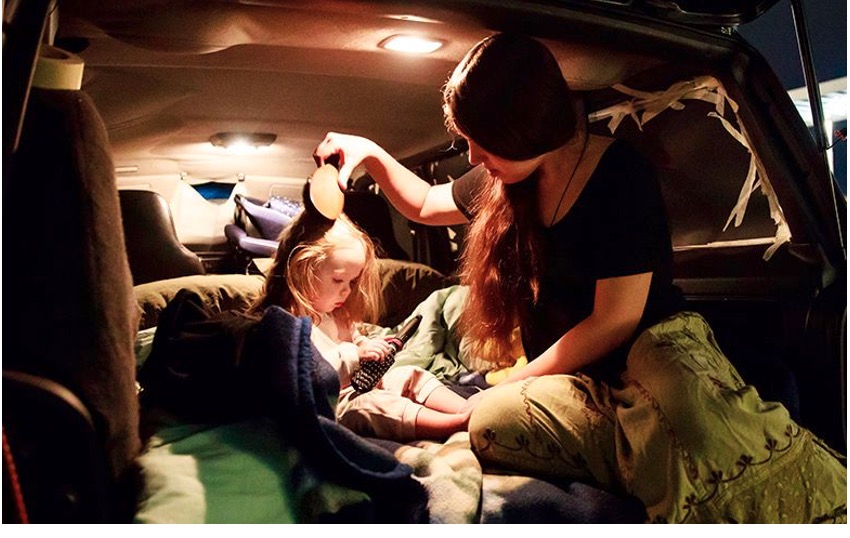
PLANNING WATCH - Los Angeles suffers dearly from the loss of older single-family homes. Since nearly all are replaced with McMansions or apartments, there is no net loss of housing, only less expensive housing. This is why LA suffers from simultaneous increases in homelessness, overcrowding, and vacant housing. Even though thousands of people annually exit LA, many of those who remain end up sleeping on couches, or in cars (picture above) storefronts, and sidewalks. They would gladly move into a vacant house or apartment, but can’t afford them. Quite simply, their choices are framed by their low incomes and the expensive price of vacant housing.
It’s not that that there are zero resources for reducing the homeless and overcrowding in Los Angeles and other US cities, but the assistance offered is a fraction on what is needed. Furthermore, this gap is growing because the elimination of HUD housing programs began during the Nixon administration (1968 - 2003), a half century ago.
Big surprise, Los Angeles suffers from an acute lack of low-priced housing. This is the primary reason why, despite so many local people annually leaving for less expensive housing markets, LA remains the American city with highest number of homeless and overcrowded residents.
HOW CAN WE EXPLAIN THESE DEVELOPMENTS?
Cause 1. The end of new public housing in the United States. What began during the Nixon Administration has never ended. The National Alliance to End Homelessness has identified a late 2025 change in HUD Federal housing programs that will minimally cause 170,000 people to lose shelter.
On November 13, 2025, the U.S. Department of Housing and Urban Development (HUD) issued a sudden change to the FY 2025 Notice of Funding Opportunity (NOFO) for the Continuum of Care (CoC) Program Competition – the largest federal program to provide funding and resources to communities to address homelessness . . .
At least 170,000 people nationwide are expected to lose their supportive housing because of this sudden shift, and impacts will be felt most acutely on the local level.
Cause 2. At the local level, especially in Los Angeles, declines in real income have forced many thousands of people into homelessness and overcrowding. Controlling for inflation, most personal incomes have shrunk, leaving the worst off without a permanent place to live. They have either left LA or become homeless. The “lucky ones” remained, living in overcrowded conditions.
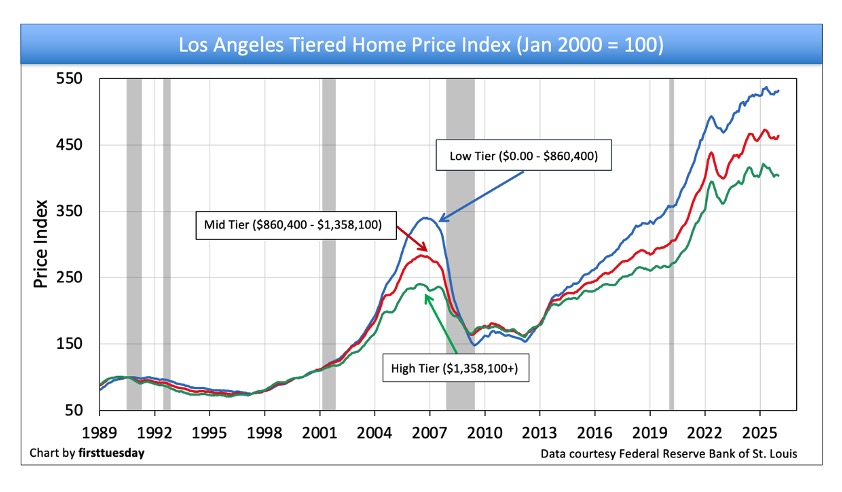
A closer look at the above chart reveals that controlling for housing costs over the past 35 years, housing prices in Los Angeles increased the most for those in the lowest price category. The best year was 1997, when housing prices bottomed out. Since 2012, controlling for inflation, housing prices have tripled, which has adversely impacted all income categories. At the same time, homelessness also rose in Los Angeles.
The situation becomes more dire when projected into the future. By 2028, when LA hosts the Olympics, over 100,000 Angelenos could be homeless, according to the Los Angeles Homeless Services Authority. As for the overcrowded, conditions are just as grim.
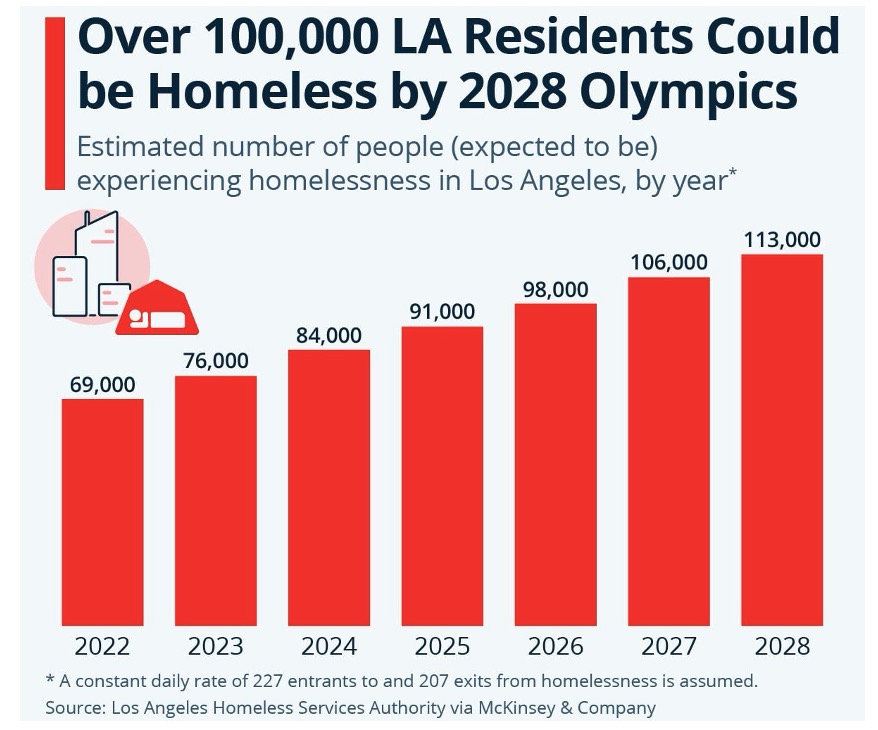
With housing conditions so bad in LA – undoubtedly made worse by the 2026 World Cup and the 2028 Olympics – there is little that the City and County can do without the restoration of Federal housing programs. Since this is not likely, LA faces a fait accompli. We can look forward to wonderful pledges from incumbents and candidates, but their campaign promises regarding homelessness remain undeliverable until canceled Federal housing programs are restored.
Until this happens, get ready for grim times!
(Dick Platkin is a retired Los Angeles city planner who writes about local planning issues in LA. He is a board member of United Neighborhoods for Los Angeles (UN4LA). Previous columns are available at the CityWatchLA archives. Please send questions to [email protected].)