Comments
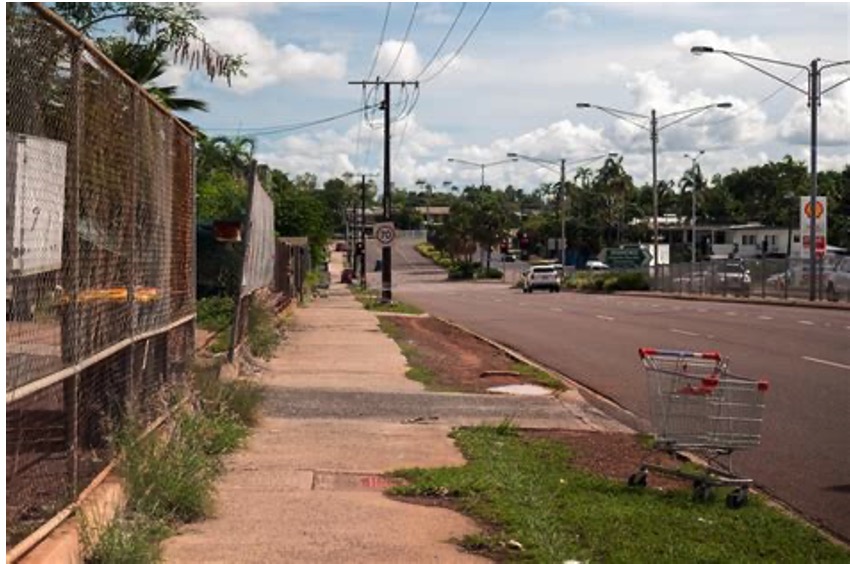
PLANNING WATCH - There is no shortage of on-line documents about a potential urban forest in Los Angeles. But if you want to observe the planting and maintenance of street trees in
Unfortunately, the best urban forest document about Los Angeles I know was prepared in 2018 by the now defunct Coalition to Preserve Los Angeles. Here is my summary:
The cities with the best urban forests – Austin, Portland, and Sacramento -- have comprehensive Urban Forest Management Plans in their General Plans. While Los Angeles has a General Plan, it is mostly out-of-date. For example, the General Plan Framework element is now over 31 years old, and no update is proposed. Its Chapter 9 only has one page of broad Goals, Objectives, and Policies about LA’s urban forest. For example, Policy 9.42.1 states, “Streamline the permitting process for planting street trees.” While innocuous, it was adopted by the City Council 31 years ago and has not been followed. The Framework’s Chapter 10 also contains a mini-implementation program: “Require street trees at the minimum spacing required by the Division of Street Trees.” Too bad that the Division of Street Trees has since been renamed Urban Forestry and contains no information about tree spacing.
You get what you pay for: While US cities with admirable urban forests allocate 1 percent of their city budget to street trees, LA budgets .25 percent to urban forestry and often depends on volunteers.
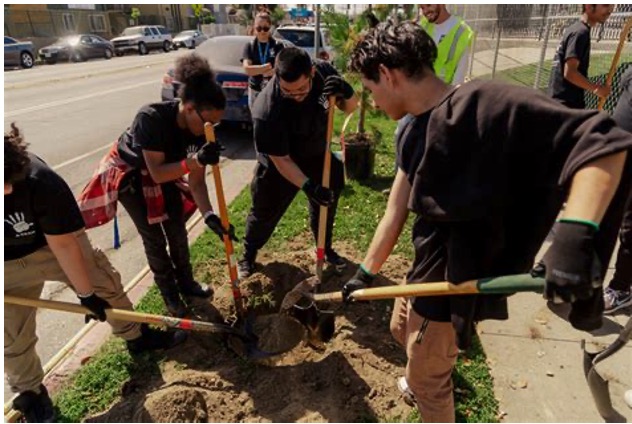
This must change because each year that passes without a comprehensive urban forestry implementation program causes Los Angeles to fall further behind. These are the changes that the City of Los Angeles should implement to reverse this trend.
With a total annual budget of $14 billion dollars per year, the 1 percent threshold established by cities worth emulating, means that LA should spend $140 million per year on its urban forest. Unfortunately the City of Los Angeles – like many other US cities -- is facing an enormous budget crisis. This year’s LA’s municipal budget includes major transfers of Urban Forestry employees to other departments. While the budget should make increases to reach the one percent target, the Council has done the opposite, approving major cutbacks because of reduced City revenue. As a result, the amount allocated to manage LA’s urban forest has taken a major hit. Instead of rising to meet the 1 percent level of other cities, it has declined. This means the following urban forest goals are no longer in reach.
- Add an Urban Forest Element to LA’s General Plan, in lieu of several small sections in the out-of-date Framework (1995) and Open Space (1973) elements.
- Ensure that the Urban Forest General Plan Element requires a tree canopy to be equitably distributed across city neighborhoods through economic equity policies and public tree budgeting data.
- Increase the Urban Forest Division’s allocation to one percent of the city’s budget.
- Implement the Davey Company’s comprehensive Los Angeles Tree Inventory and Assessment.
- Give LA’s urban forest the stature of LA other infrastructure categories, such as roads and sewers, to protect this resource from future, unstable City Hall budgets.
- Establish an Urban Forest Five Year Plan that sets canopy targets and identifies the required budget and staff resources.
LA is trapped by an imposed budget crisis that makes these urban forest goals (temporarily?) unobtainable.
(Dick Platkin ([email protected]) is a retired LA city planner. He reports on local planning issues and serves on the board of United Neighborhoods for Los Angeles. Previous columns are available at the CityWatchLA archives.)