
Greenwashing Artificial Turf—Cash or Cancer?
THE ENVIRONMENT -
Dedicated to Eric Preven
When California banned plastic bags I felt relief. Why? Because of the pollutants: they poison our oceans, our soil, and our bodies. I like my body. Plastic bags break down into micro- and nano-plastics which can contain carcinogenic chemicals discovered in human blood and brains. Plastic is killing us.
So why are California and the City of Los Angeles dragging their feet on plastic turf, allowing schools, stadiums, and homeowners to install it even though they know it has negative impacts on personal health and the environment? Because the artificial turf industry lobbyists use the tobacco industry’s playbook to deny, obfuscate, and provide misleading information. Some people call this lying.
Lobbyists like these influence legislation, by distorting facts, twisting truth and promising silk purses. When I joined the charge against the movement to replace natural grass with plastic fields, I met Eric Preven, a “smart speaker,” local activist and truth teller. Never afraid to speak up, Previn urged me, “Keep pushing, keep prodding, it’s gonna be tough but worth it.”
The fake turf industry claims there’s nothing to see here. Never mind the studies by LA Riverkeeper, UCLA, or USC. Don’t worry about the toxic chemicals and grass blades that leach into our groundwater. They make sure that our state and local politicians won’t implement regulations or oversight and Governor Newsom in October 2023 punted control of artificial turf back to local municipalities.
The artificial turf industry insists that installing the synthetic turf saves water. This simply isn’t true. Plastic fields still need water to clean them and keep them cool enough to play on during heat waves.
The owners of artificial athletic fields and coaches support plastic turf because they claim it’s cheaper and easier to maintain, and allows more playing time than natural grass. Studies show that natural grass is more affordable in the short- and long-run, and California Interscholastic Federation guidelines cancel play when the temperature is over 92.1°F. California lost 13 days of playtime in 2024 due to excessive heat. (As a sidebar, 92% of NFL players prefer playing on natural grass over artificial turf, because it’s easier on their bodies and they get fewer injuries.)
Monsanto Industries invented AstroTurf in the early 1960s. Monsanto was trying to solve a fundamental problem: how to provide consistent, low-maintenance athletic surfaces for inner-city schools, because their research showed that military recruits from rural areas were more physically fit than their urban counterparts. In their effort to mimic natural grass, they made a product —spoiler alert—Chemgrass.
Since the 1960s, the horrifying and unexpected consequences of using artificial turf have become clear. Statewide only Millbrae, San Marino, and Carmel, California, have banned synthetic turf. Cities in Massachusetts, such as Concord, Sharon, and Wayland, have banned or imposed moratoriums on installing new plastic turf. Salt Lake City, Utah has a ban on artificial turf on private property. In November 2025 LAUSD voted to adopt a resolution to transition away from artificial turf and to halt the installation of five new fields.
Meanwhile, Harvard-Westlake, a Los Angeles private school ranked number five nationally with a $148M endowment, created a “special purpose corporation” to purchase the land of a much-loved community resource — Studio City Golf and Tennis—which was over 16 acres of mostly open space next to the LA River. Harvard-Westlake closed the facility and built a gymnasium, a parking structure, tennis courts, an Olympic-size swimming pool, and is potentially installing two artificial turf football fields.
The community sued Harvard-Westlake over its proposed use of artificial turf—and certain parties just settled. Though the settlement is subject to a non-disclosure agreement, it seems likely that the school has agreed to test the turf for PFAS using a Total Organic Fluorine (TOF) test before installation.
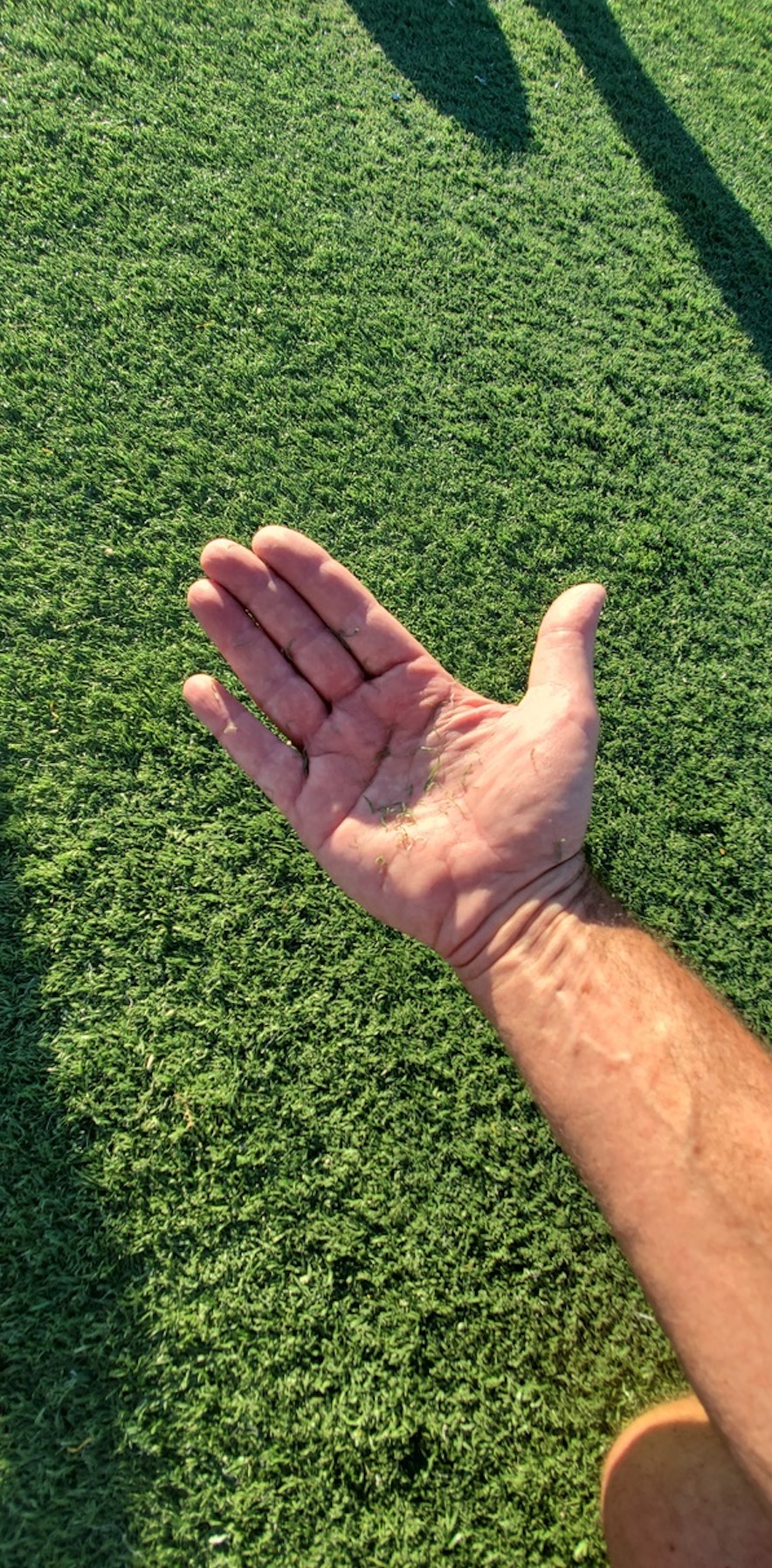
Sounds reasonable? Here's why it is not. Based on a recent California court ruling, TOF is not a sufficient test for PFAS. The test the turf industry doesn’t want Harvard-Westlake to do is the Synthetic Precipitation Leaching Procedure (SPLP), which measures how much PFAS leaches from the turf. The danger is in how the turf breaks down over time and usage. Artificial turf fields leach PFAS, and shed micro- and nano-plastics, both of which are dangerous. Two artificial turf fields can shed 4 to 6 tons/year, whereas non-infill fields have 16x more blades and can shed 64 to 96 tons/year.
Our councilmember for CD4, Nithya Raman, wrote in response to the Harvard-Westlake project that she “strongly advise[d] the use of natural grass for athletic fields. If artificial turf is laid down, require that it be free of perfluoroalkyl and polyfluoroalkyl substances (PFAS).”
We had the turf tested in 2023, as did Harvard-Westlake. Our scientists exposed Harvard-Westlake’s error by noting that their report “fail[ed] to address the positive detections of 8 distinct PFAS in the artificial turf samples.” These warnings went unheeded giving Harvard-Westlake false permission to proceed with their plan to use toxic plastic.
Would you let your child play on artificial turf? Exposure to PFAS in humans has been linked to kidney and testicular cancer, decreased responses to vaccines, elevated cholesterol, low birth weight in babies, liver damage, and still undiscovered disorders. If artificial turf is not essential for the project, why use a product that contains chemicals known to increase the risk of multiple diseases?
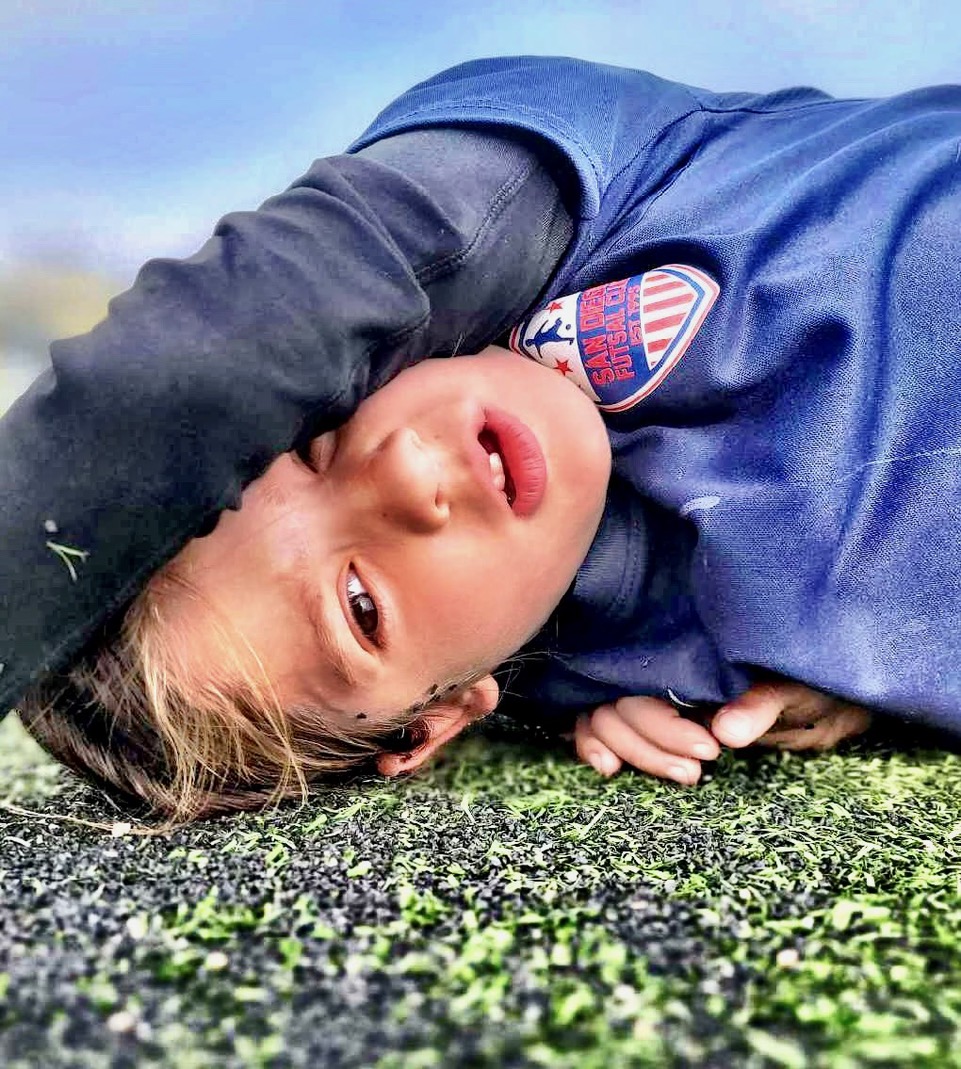
Harvard-Westlake has asserted that their plan is an environmentally superior change from the existing use. They even wrote on their website that the project: “will use [its] resources to serve purposes beyond ourselves, and they will teach critical lessons of citizenship – in greater Los Angeles and in the natural world.” Really?
We ask: how can razing 240 ‘significant trees’ and the replacement of green open space with concrete and plastic grass be environmentally superior? Sure, Harvard-Westlake is planting 393 new trees, but it takes 25 to 60 years for a new tree to absorb as much carbon dioxide (CO2) as a mature 70-year-old tree.
Why does Harvard-Westlake ignore the danger to kids’ health and insist on using a fossil fuel product that will further aggravate climate change, intensify the heat island effect, and impact the surrounding watershed? Natural grass fields would protect their newly planted trees, the ocean, and prevent soil disintegration, reduce CO2 and methane off-gassing. Why would they use materials that are not recyclable and, at the end of their lifespan, are sent to landfills or are improperly dumped, contributing to plastic waste and pollution?
There are solutions. Drought-tolerant hybrid-grass fields managed with regenerative organic practices use less water, thrive in our climate, and recharge our groundwater in a far superior, safer, and more cost-effective way than artificial turf.
Harvard-Westlake could heed Eric Preven’s call to action and honor his legacy by taking the lead in our city and choosing natural grass fields over artificial turf. Harvard-Westlake students would know that their school genuinely prioritizes their health and has an honest commitment to a sustainable future for all, truly serving a purpose beyond themselves, a lesson worthy of a school of their standing.
(Adele Slaughter is a poet and journalist who lives in Studio City and currently, serves on the Community Forest Advisory Committee in LA as the vice-chair and an alternate representative for CD4. The views expressed in this article are solely those of Ms. Slaughter.)