
Why Are Major Skid Row Projects Invisible?
SKID ROW - A few weeks ago, a portion of my Title VI Civil Rights complaint against the City of Los Angeles was accepted by the U.S. Environmental Protection Agency (Complaint No. 21-26-R9). My complaint focuses on disparities involving environmental review, trees, and open space affecting the Skid Row neighborhood, which the EPA identifies as “Central City East”. This investigation is now active.
While continuing to research issues raised in my complaint, I stumbled across a different question altogether: How can residents participate in planning the future of Skid Row if they have no reliable way of knowing what projects are being proposed around them?
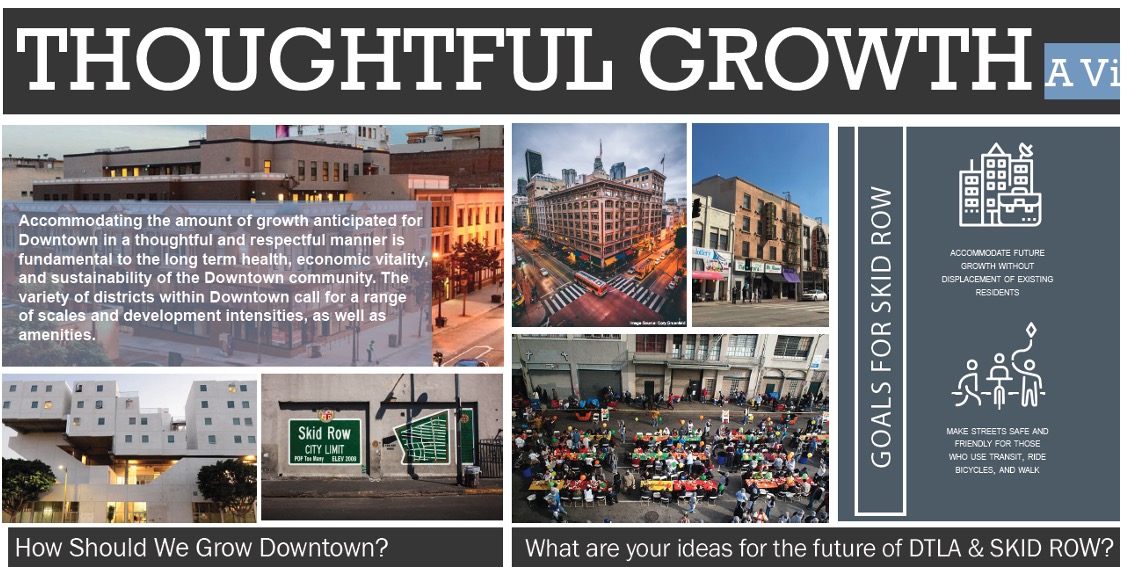
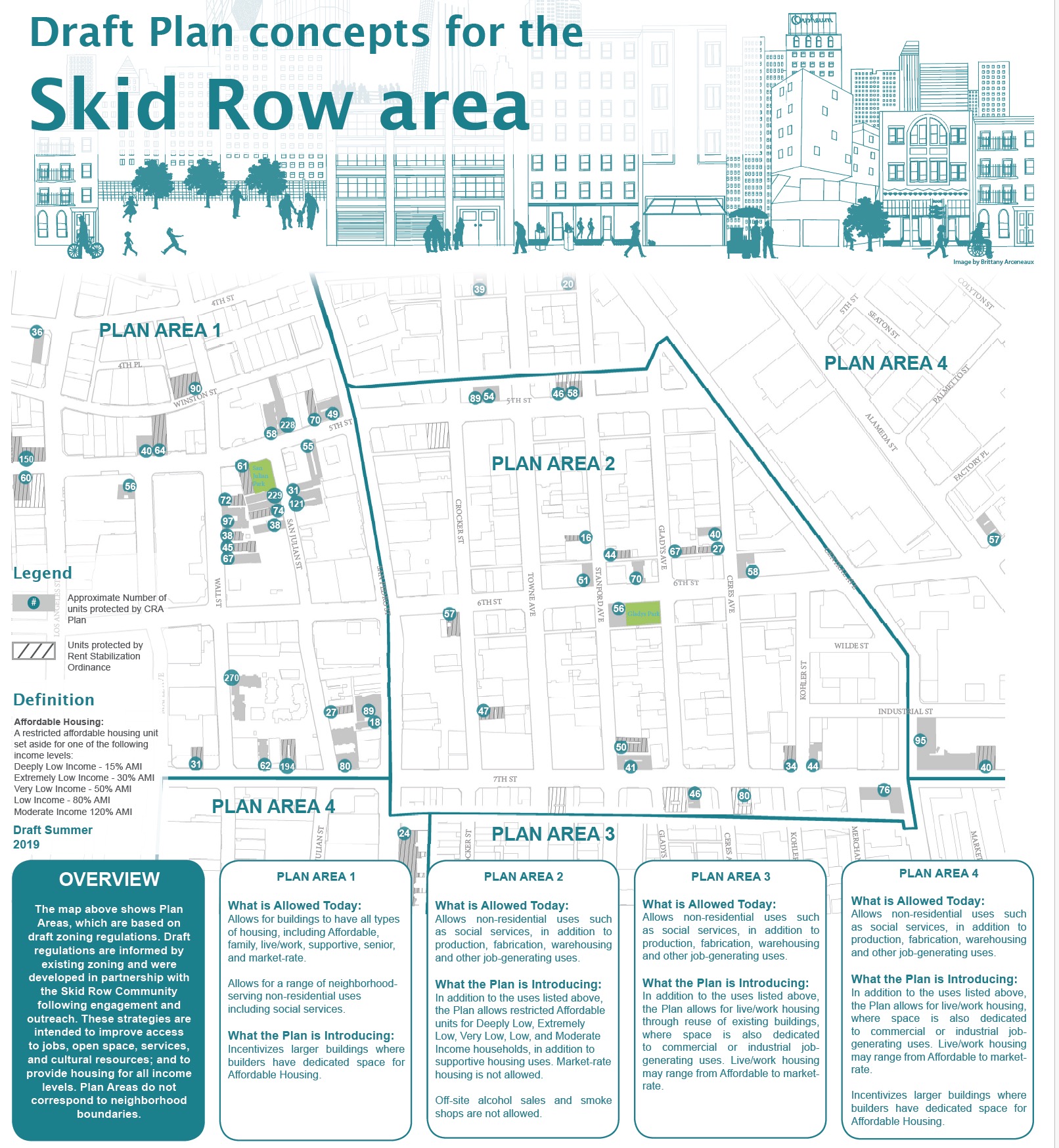
Representatives of the Los Angeles Department of City Planning spent years facilitating workshops, meetings, surveys, and public planning discussions as part of DTLA 2040, the comprehensive update to Downtown's Community Plan. Staff worked closely with a local coalition I am a part of called Skid Row Now & 2040, which produced its own policy paper, Containment and Community, authored by Catherine Gudis, Ph.D. We were told that our input would help shape the future of Downtown.
Notably, the final Plan incorporated numerous Skid Row-specific recommendations such as enhancement of the public realm, coordination with residents and community organizations, recognition of the neighborhood’s unique character and history, and prioritization of inclusive design.
What I did not fully understand at the time is that a Community Plan is only as meaningful as the approval process through which future projects move.
A few months ago, I began requesting public records for an abandoned factory at 431 S. Crocker Street, which I had heard was being redeveloped. Initially, I was simply trying to determine whether environmental review under CEQA was underway and, if so, where the project stood in that process.
Planning had no records for me at that time. I then shifted my inquiry to the Los Angeles Department of Building and Safety (LADBS), where I uncovered draft plans for a housing development of more than 200 units, a clinic, and accessory parking. Emails indicate that the project was being evaluated through an ED1 streamlined approval pathway. This ministerial process would not have generated a traditional discretionary Planning case number or triggered the public notice and hearing process typically associated with discretionary approvals. A few days after I emailed questions regarding the lack of public notice, Planning came back to say that ED1 was no longer viable for the project and that the developer would need to re-submit their plans. I only learned of all this through several CPRAs. This is not an inclusive process.
In other words, a project large enough to reshape a prominent industrial site in Skid Row was moving through the approval process without the planning records and public visibility that many residents would reasonably expect to find.
And then, I stumbled into a larger realization about projects in Skid Row. The specific fate of 431 S. Crocker is less important than what it taught me.
In my previous CityWatch article (Skid Row Gets the Weakest CEQA Review in L.A. and That's a Civil Rights Problem), I asked whether Skid Row receives weaker environmental review than neighboring communities. However, environmental review is only part of the story. Communities cannot participate in decisions they never learn about in the first place.
Since last November, I have spent countless hours reading CEQA documents, Planning reports, emails and administrative records associated with projects across Skid Row. What I have come to realize is that many of the most consequential planning decisions are not made when a project reaches a public hearing, they are made behind the scenes between the developers and the City. 431 S Crocker St. is not the only project I have found that fits this profile; there are several others. That may sound difficult to believe, but the administrative record tells a different story. The Weingart 3-Tower project (the 3rd tower still under construction) is a development in which numerous consequential decisions were made shielded from public view. A 13,815 sq. ft. courtyard/urban park, family sized housing units and public restrooms were just a few of the things that were quietly removed long before members of the public could understand what was occurring. The new County-run Skid Row Care Campus received a CEQA Notice of Exemption from the State, which allowed it to bypass public hearings. These “invisible” projects form a pattern which needs some sunshine on it…sunshine being the best disinfectant.
The real question is often not: What is being built? The real question is: What approval pathway is being used? And: What is being decided in private without public participation or notice?
When a project proceeds through a discretionary process, public notice is typically provided, documents become available, community groups can monitor proposals, environmental review can occur, public hearings may be held and neighbors can comment.
When a project proceeds ministerially through various forms of streamlining, those opportunities can become significantly reduced or eliminated altogether.
The difference sounds technical, but it isn’t. It determines whether the public gets a seat at the table. And if public participation disappears during project approvals, many of the promises embedded in DTLA 2040 become difficult to realize in practice. This distinction matters because Skid Row is currently experiencing tremendous development pressure. Affordable housing projects continue to be proposed. Downtown is entering a new era of Adaptive Reuse. Former SRO hotels are changing hands and being rehabilitated (again). Property owners and developers are positioning themselves for the next wave of investment.
Yet the community has not been given meaningful opportunities to participate in many of these conversations. In other words, communities may spend years helping shape a Community Plan only to discover that major projects are ultimately approved through pathways that provide little or no meaningful opportunity for participation.
Communities deserve notice and the opportunity to understand what is being proposed around them. They deserve access to project documents before major decisions are made and to know when development standards involving trees, open space, public benefits, environmental review, and neighborhood impacts are being modified.
Other Los Angeles communities have begun asking similar questions.
As the United Neighbors in Defense Against Displacement (UNIDAD) Coalition recently observed, which I found on SAJE’s website:
“We support the construction of new affordable housing, but the city must ensure ED1 developments do not cause displacement and gentrification and harm low-income communities of color, who continue to bear the burden of our housing system’s systemic inequities…Our goal is to ensure preservation and protection are not lost in the city’s focus on streamlining production.”
\That observation captures an important truth. The debate is not simply about whether housing should be built. It is also about how decisions are made.
There is widespread support for all levels of affordable housing in Skid Row as well as rehabilitation of its aging and historic buildings – it’s in our community recommendations! Why, then, is the City treating public participation here as an obstacle?
Over the last year, I set out to understand why projects in Skid Row did not receive the same level of environmental review as neighboring communities. What I discovered is that the most important Planning decision is not always the project itself but oftentimes the approval pathway. The approval pathway determines whether the public gets a seat at the table.
(Katherine McNenny works in Los Angeles' garment industry as a Patternmaker and lives Downtown. She is co-founder of Industrial District Green, an organization that has planted over 400 trees in the area. Her focus is on issues that affect the Skid Row neighborhood and how to improve City urban forestry policy.)