Comments
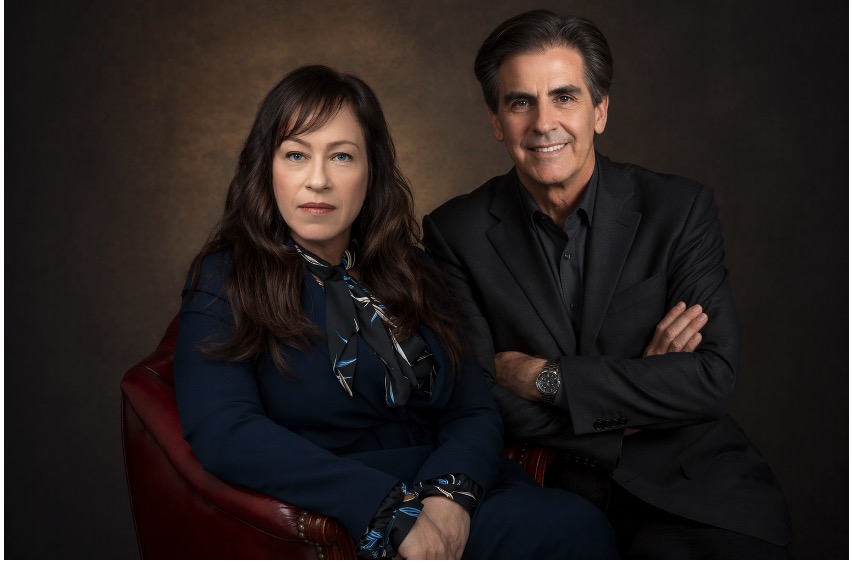
GUEST WORDS - Two longtime Los Angeles County Public Defenders are running against each other for Superior Court Judge, Seat 131. On paper, they share similar credentials: years in the same office, experience in the courtroom, and a career representing indigent clients. But when it comes to the one quality that matters most for a judge—judicial temperament—the differences between Donna Tryfman and David Ross could not be more clear.
Let’s start with what they have in common: both have spent their legal careers as Deputy Public Defenders in Los Angeles County.
But that is where the similarities end.
Before becoming a lawyer, David Ross built a career in public service and journalism. He began as a legislative aide on Capitol Hill, working on policy analysis and constituent issues. He then spent a decade as an award-winning television journalist and documentary producer, including work with PBS covering national programming and major global events. As a reporter and anchor, he covered crime, courts, natural disasters, and presidential politics, even interviewing future Vice President Al Gore and following national campaigns on the ground. These experiences required him to listen carefully, evaluate complex information, and communicate with clarity—skills that translate directly to the bench.
He later attended law school, graduating in the top 13% of his class, and has spent the past 30 years as a Public Defender in Los Angeles County. Over that time, he has represented thousands of clients, handled serious and complex cases, and built a reputation for professionalism and respect in the courtroom.
Donna Tryfman has also dedicated her legal career to public defense, joining the Los Angeles County Public Defender’s Office in 1998. She has worked in courthouses across the county, including LAX, Metro, Huntington Park, Inglewood, Van Nuys, Sylmar, Eastlake, and the Clara Shortridge Foltz Criminal Justice Center. She currently serves in the Major Cases Unit, handling serious criminal matters.
What raises concern, however, is not her experience, but her judgment.
In March 2026, a social media exchange between Tryfman and a congressional candidate revealed a pattern that voters should take seriously. In response to a post about abolishing ICE, Tryfman reacted with a dismissive “yawn” emoji at approximately 5:30 AM. When asked to explain the reaction, she did not identify it as accidental. Instead, she engaged further, first asking what the post was about and then suggesting the response may have been intended for a different post involving Israel. Even after the original post was shown to her, the explanation continued to shift rather than resolve the questionable comment. Then, that evening at 1:00 AM, she reinitiated the conversation unprompted to add a separate comment referencing her opponent’s religion, introducing a new and unrelated element into an already sensitive exchange.
This may seem minor in isolation. But judges are expected to exercise restraint, clarity, and impartiality at all times, especially when engaging with issues that may later come before the court. Even informal interactions can raise questions about how a judge evaluates sensitive topics and whether they can maintain the neutrality required on the bench.
California law requires judges to step aside from cases in which their impartiality could reasonably be questioned. The concern here is not about a single exchange, but about what it suggests. If this is how judgment is exercised in a low-stakes setting, voters are left to consider how it might translate in a courtroom, where the stakes are far higher.
Judicial elections rarely receive the attention they deserve, yet they shape the fairness and integrity of the legal system in profound ways. Voters should look beyond résumés and consider the qualities that cannot be taught: temperament, discipline, and the ability to remain impartial under pressure.
In this race, those qualities matter most.
(MJ Hirsch holds a PhD in Political Science from USC and has worked on campaign strategy and voter behavior analysis for the past decade. MJ lives in Los Angeles with her dogs.)