
Comments
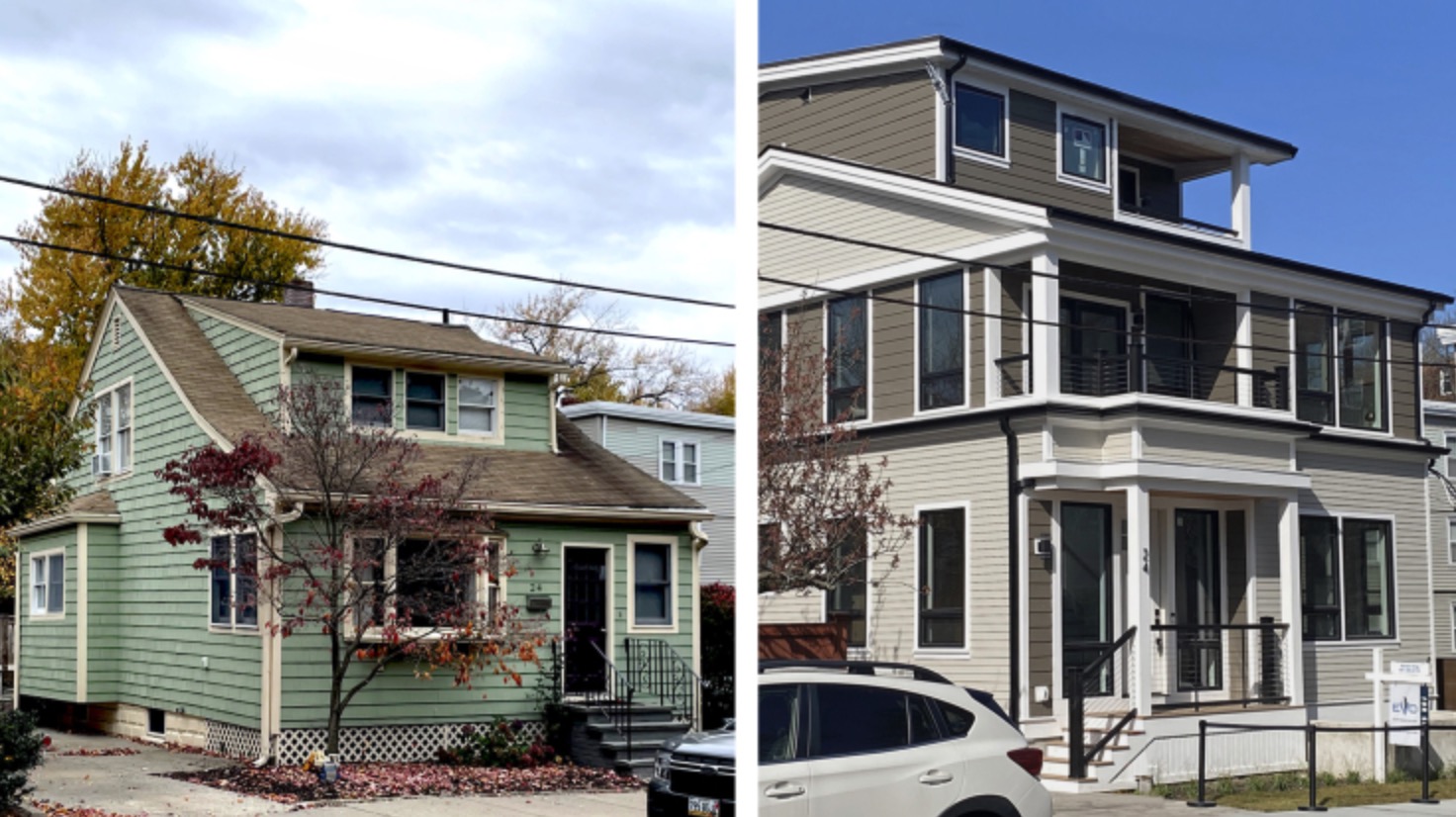
AUTHOR ESSAY - Around the corner from where I live in Cambridge, Massachusetts, there is, or I should say was, a one and a half story bungalow, one of almost a dozen identical cottages built near each other between 1928 and 1931. The house was small: just over 1,100 square feet, divided into five rooms, including one bathroom. Last July a developer demolished it and now has built a “luxury single-family house” with 3,600 square feet, four bedrooms, and four and a half bathrooms. The asking price is $4.5 million.
This is the fourth of these bungalows to be razed and replaced with a larger, exorbitantly priced house. Its transformation—and similar transformations of nearby properties—inspired me to write an opinion essay for The Boston Globe on the scarcity of modestly priced single-family homes. The piece focused on Greater Boston, but other high-priced metropolitan areas are likewise afflicted.
Many working- and middle-class residents are frustrated that they have become, in the words of the Globe, “forever renters.” For couples and families of all races and backgrounds, immigrant and native-born, the price of homes is many times what they can afford to pay. However one feels about the merits of homeownership, many Americans who would like to buy a house cannot afford to do so.
Of course, the high cost of housing has many causes. Among them are the changes in housing markets during the Covid-19 pandemic, such as demand widening across geographic areas and the inflation surge and resulting hike in mortgage interest rates. Rising insurance premiums, increases in the costs of construction, large numbers of millennials seeking to buy houses, and the migration of affluent households to cities have all contributed to soaring housing values.
Nonetheless, a fundamental source of the homeownership crisis is the lack of modestly priced single-family homes. One great cause of this scarcity is that for decades well-off suburban towns have thwarted all but affluent residential development. As I first revealed in historical studies of Arlington, Acton, and Weston, Massachusetts, and scholars such as Amy Dain have recently confirmed, starting in the late 1960s suburban towns in metropolitan Boston imposed layer upon layer of regulations, including large minimum lot sizes, stringent land-use policies, and complicated and lengthy permitting procedures. As a result, most suburban homebuilders in Greater Boston only produced houses for the high end of the market. At the same time, the starter homes built in previous generations in neighborhoods like mine are disappearing.
Yet planners and officials in eastern Massachusetts cities and similar locales across the country have encouraged the construction of large apartment buildings over other types of housing. Although these projects often set aside units for low-income households, they do little to make housing in general more affordable or neighborhoods more livable. For the last 20 years, for example, my hometown of Cambridge has encouraged developers to build tens of thousands of apartments, yet rents have remained among the highest in the state.
These facts led me to conclude that the only way to increase the supply of moderately priced single-family homes is to build and preserve them, whether as freestanding structures or as part of duplexes, rowhouses, courts, or other clusters.
Encouraging development of moderately priced single-family homes, as I explained in my opinion piece, requires pursuing numerous approaches. For decades reformers have called for reducing local anti-growth regulations, and recently there has been some political momentum to do so. At the same time, many states have passed laws encouraging owners to build accessory dwelling units (ADUs). A novel effort, on the ballot this fall in Massachusetts, would allow the building of single-family houses on small lots. States and local governments could go further, as Massachusetts has begun to do, by acquiring land for development of various types of homes and providing financial incentives, such as tax exemptions, to developers of modestly priced housing.
Finally, in addition to the measures I noted in the Globe, communities could protect the existing stock of small “starter” houses. Just as they currently use floor-to-area ratios, local governments could set a formula based on the current volume of a house to limit how much within a certain number of years an owner could enlarge a structure or, if it were demolished, its replacement. In that way small houses like the disappearing bungalows in my neighborhood might remain available for the young couples and families who yearn to own their own home.
(Alexander von Hoffman is a Senior Research Fellow and Lecturer in Urban Planning and Design at the Harvard Graduate School of Design, specializing in housing policy and urban development. He is the author of several books on American neighborhoods and housing, with work published in outlets such as The Atlantic and The New York Times. His research focuses on community development, sprawl, and the history of low-income housing policy in the United States.)