
Comments
PLANNING WATCH - Impressions of a visit to s Shanghai and Beijing: China is a large country, with major economic growth over the past three decades. This includes a rapidly rising standard of living for most people, despite very observable inequality.
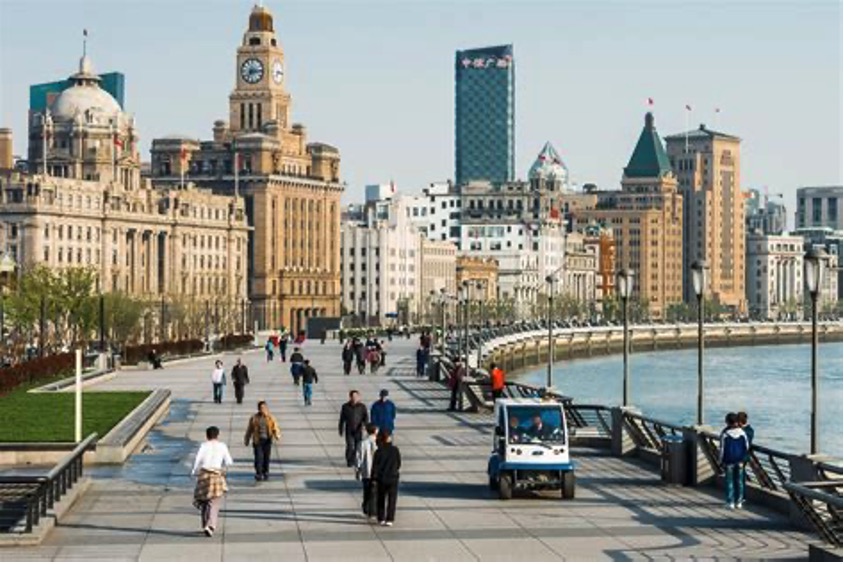
Shanghai is a large city, with many older neighborhoods, such as the riverfront area in the photo above. My wife and I stayed in an affluent area with many upscale stores and multi-story shopping centers located in existing commercial buildings.
As a city planner I was impressed by several things. Much of older Shanghai has been saved. Plus, many of Shanghai’s streets have separate lanes for scooters and bikes. The sidewalks are often wide, too, with beveled areas for rainy days and the handicapped.
One thing I was critical of was the large number of cars and freeways. Nevertheless, the sidewalks are highly walkable, all major cities in China have subways, and China has more high speed rail than the rest or the world combined.
From a city planning perspective, Shanghai is impressive, but still has its drawbacks. For example, we did not see any newspapers, magazines, or newsstands in either Shanghai, or for that matter, Beijing. We were told that people get news on their cell phones, which are also widely used for shopping.
The only newspapers, in both Chinese and English, we saw were for guests in upscale hotels. The English language newspaper, which we assumed had similar content to the Chinese newspapers, focused on China, with minimal coverage of the rest of the world, including the current war between the US, Israel, and Iran. The Chinese public’s knowledge of it would be minimal, unless they figured out a way to monitor anti-war coverage available on YouTube, such as Judge Napolitano, Democracy Now, or retired Colonel Larry Wilkerson.
China has its own phone apps, and foreign cell phones. like ours, barely worked. This means that unless people know other languages and have access to foreign news sources, they only know what is happening in the world through their Chinese cell phones.
While there could be alternative news sources, we did not find them. One of our hotels had a few copies of a local English language newspaper, but its coverage was events in China, with one inside story on the rest of the world, including the ongoing war between the USA, Israel, and Iran. As for foreign newspapers, we did not see any. The hotel rooms only had one TY news channel in English: CNN. We were effectively cut off from the outside word, except for antiwar.com, which inexplicably worked just fine on our US cell phones.
Other observations:
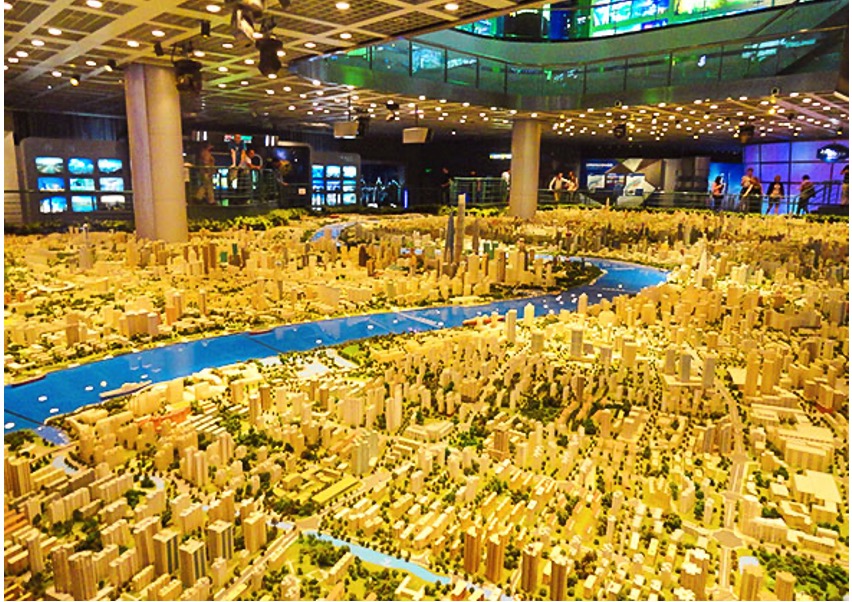
At Shanghai’s Urban Planning Exhibition Center
Urban mobility: Shanghai has an Urban Planning Exhibition Center, shown above, which features a floor-sized model of what the city will look like in 2035. Furthermore, all major Chinese cities have subways. Nevertheless, the city’s planners failed on one category: there are lots of cars and freeways. Based on different colored license plates, about a third of these cars are electric, and 60 percent of new cars are electric. Trying to move these cars, drivers, and passengers through the city is an obvious challenge, and traffic lights give a countdown in seconds, at least in Shanghai.
High-speed rail: China has more high-speed rail that the rest of the world combined, about 50,000 kilometers (31,000 miles) and still expanding. The train trip from Shanghai to Beijing only took 4 hours to cover over 1200 kilometers (about 800 miles).
Smog: China is known for its bad air, but lots of recently planted trees can hopefully help clean up some of the country’s notorious air pollution.
Supermarkets: There are no supermarkets in Shanghai, and we were told this is because most people order groceries through their phones, with quick delivery, usually via couriers on scooters. We did, however, find several produce markets in Shanghai, but they catered to older people with limited incomes, who preferred to see and shop for what they needed.
Diet: Young people, especially men, are much taller than their parents, presumably because of better nutrition, including dairy.
Cops: Chinese cities have lots of cops and, like the UK, many street cameras. Also like the UK, and unlike the United States, the cops are unarmed. Big surprise that crime stats in China are low, especially when compared to the US.
Chairman Mao’s legacy: The China we saw, with its concealed shopping centers and fast growth, still has Mao’s image on its paper currency. Long gone are the classic communist symbol of totally red flags. China’s political upheavals of the 1950s and 60s are also history, remembered by scholars, but few others.
Conclusion? The cities we saw are well planned, but most of the country’s people live in a news desert.
(Dick Platkin ([email protected]) is a retired LA city planner. He reports on local planning issues and is a board member of United Neighborhoods for Los Angeles. Previous columns are available at the CityWatchLA archives.)