

Rattlesnake Bites Border Patrol K9, Boo. Airlifted to La Mesa Veterinarian
ANIMAL WATCH - A Border Patrol helicopter landed in the middle of a busy intersection to airlift an injured Border Patrol K9 officer named Boo after the dog was bitten by a rattlesnake during an operation in the field.
The emergency response drew the attention of nearby residents and motorists as Border Patrol agents, emergency responders, and veterinary personnel worked quickly to stabilize Boo before transport. Photos from the scene show the injured K9 receiving medical attention while agents remained close to the animal during the rescue effort.
According to witnesses, Boo was injured while assisting agents in an outdoor area where rattlesnakes are commonly found during warmer weather. Rattlesnake bites can be extremely dangerous for both humans and animals, particularly working dogs exposed to rugged terrain and remote areas.
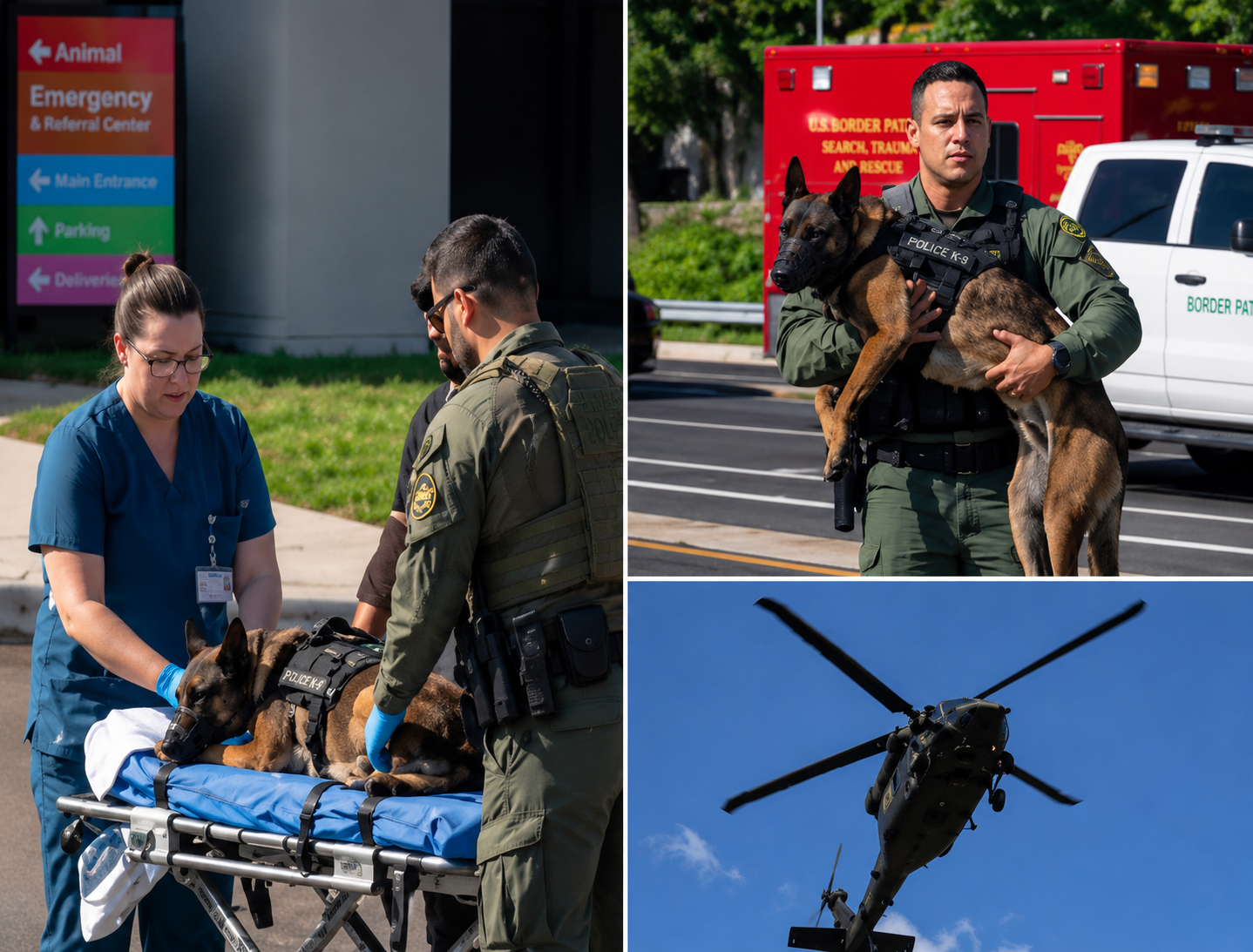
After the bite occurred, Boo was rushed to an emergency staging area where a Border Patrol helicopter landed directly in an intersection to speed up transportation to the La Mesa Veterinary Center. Agents carefully carried Boo to the helicopter while emergency medical personnel monitored the dog’s condition.
The dramatic helicopter landing highlighted the importance of K9 units within federal law enforcement operations. Border Patrol K9 officers are specially trained to assist agents in narcotics detection, tracking, search-and-rescue missions, and border enforcement activities. Handlers often develop close bonds with their dogs, who are considered both partners and valued members of the team.
Witnesses described the scene as emotional, with agents appearing deeply concerned about Boo’s condition. Several people stopped to watch as the helicopter lifted off carrying the injured K9 for emergency veterinary treatment.
Veterinarians say rapid treatment is critical in rattlesnake bite cases because venom can quickly spread through the body, causing swelling, tissue damage, breathing difficulties, and potentially life-threatening complications. Immediate medical intervention can significantly improve survival and recovery outcomes for dogs bitten by venomous snakes.
Southern California and border regions experience increased rattlesnake activity during spring and summer months, particularly in dry brush areas, rocky terrain, and open desert environments where Border Patrol agents and K9 teams frequently operate.
At this time, officials have not publicly released detailed information regarding Boo’s current condition. However, the swift response by Border Patrol personnel, emergency crews, helicopter pilots, and veterinary staff demonstrated the extraordinary measures taken to protect and save the lives of working law enforcement animals.
The incident also served as a reminder of the dangers faced not only by federal agents, but by the highly trained K9 officers that work beside them every day in difficult and often hazardous conditions.
(Phyllis M. Daugherty is a former Los Angeles City employee and a long-time animal welfare advocate. A contributor to CityWatchLA, she is known for her investigative reporting on animal shelter operations, misuse of public funds, and the dangers of poorly regulated pet adoption policies. She is a strong proponent of public safety in animal control, advocating for stricter oversight of aggressive dog breeds, especially pit bulls, and for breed-specific legislation.)