

The Broken Promise to the Next Generation: What South Korea Taught Me About Our Own Backyard
THE NEXT GEN -
Sometimes it takes traveling halfway around the world to recognize what’s happening right here at home.
As I write this, I’m on the beautiful island of Jeju, South Korea, an island that reminds me of Honolulu in this part of the world. After spending five days in Seoul, I’ve found myself thinking about something I didn’t necessarily expect to encounter here: the striking similarities between the younger generations in South Korea and those in the United States.
Different countries, different cultures, but remarkably similar frustrations.
In South Korea, young people are raised with a familiar message. Study hard. Get good grades. Get into a good university. Work hard, and you’ll have the opportunity to build a successful life.
Sound familiar?
It’s a promise that generations of parents have made to their children, including many of us here in America. Education, hard work, and sacrifice were supposed to provide a pathway to financial security, homeownership, and a better future.
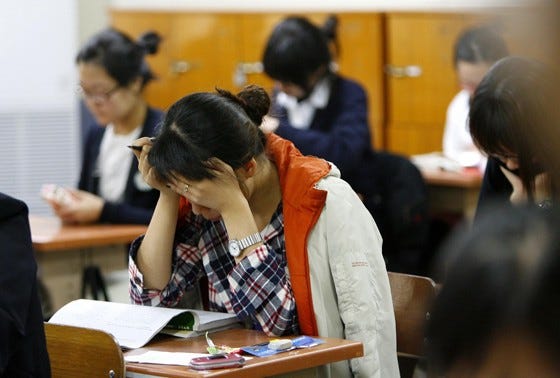
But what happens when that promise is no longer being fulfilled?
What I heard and observed in South Korea was a younger generation increasingly frustrated with the expectations placed upon them by their elders. They have invested years in their education, sacrificed much of their childhood, and worked toward achieving the goals that society told them were important. Yet many now question whether the economy will provide the opportunities they were promised.
The irony is that this is not just a South Korean problem. It’s increasingly an American problem as well.
Here at home, young people are confronting extraordinary housing costs, economic uncertainty, and the growing difficulty of establishing themselves independently. For many, the traditional milestones of adulthood seem increasingly out of reach.
And it raises an uncomfortable question: Why should we expect the next generation to embrace the same promises when the circumstances surrounding those promises have fundamentally changed?
That brings me to the election of Nithya Raman in Los Angeles and, more broadly, why progressive ideas have found an audience among younger generations.
I’ve been thinking about this more than I might have in the past. As I’ve gotten older, I’ve come to realize that my own two daughters are part of this generation confronting many of these same challenges.
That realization has caused me to look at things differently.
Perhaps what younger people are expressing isn’t simply a rejection of traditional political thinking. Perhaps it’s a reflection of their frustration with a system they believe hasn’t delivered the opportunities they were told would be available to them.
When housing becomes unaffordable, when education doesn’t necessarily translate into economic security, and when working hard no longer seems sufficient to get ahead, it’s understandable that people begin looking for different approaches.
This doesn’t mean every progressive idea is necessarily the right answer, or that every proposed solution will work. But I think it’s important to understand why these ideas resonate with so many younger people before dismissing them.
And that’s something I’m making a conscious effort to do.
I don’t pretend to have all the answers. Nor do I believe that changing one’s perspective means abandoning everything one has believed in over the years. But I do believe that experience should make us more willing to listen, reconsider, and understand the challenges facing those who will inherit the communities we’ve helped shape.
Perhaps that’s one of the unexpected lessons of traveling.
Sometimes you have to go halfway around the world to recognize what’s happening in your own backyard.
And perhaps the most important responsibility of an older generation isn’t to tell the next generation how things used to work, but to listen when they explain why those same things aren’t working for them anymore.
For me, that begins with making a genuine effort to better understand the progressive ideas gaining traction in Los Angeles, starting with the political conversation surrounding Nithya Raman and her election as our next mayor.
Because before we judge the next generation’s politics, perhaps we should first take a closer look at the world we’ve left them.
(Thomas Glick is a former Los Angeles City Planning Department Planner with over three decades of municipal expertise. Since 2017, they have served as a Board Member for the Sherman Oaks Homeowners Association, continuing their commitment to local land-use policy and community advocacy.)