
Where's The Beef? LA’s Mayoral Debate Had Plenty of Rhetoric, Not Enough Remedies
NICK’S VIEW - I’ve been reflecting on what the recent mayoral debate between Mayor Karen Bass and challenger Councilmember Nithya Raman revealed. Yes, the candidates defined conditions and offered a diagnosis of Los Angeles. But there was a substance gap.
Diagnosis and treatment are not the same thing. There’s a world of difference between identifying what is wrong and executing a program of correction. We heard ad nauseum about why the system is failing and little, if any, what you do to change it.
The candidates were less focused on debating with each other and more focused on debating a city under strain. Subsequently, their exchange exposed a fragmented, slow-moving, underpowered system overwhelmed by multiple crises at once.
We saw diagnosis with no prescription for change. Bass and Raman spoke, but they did not answer. I was immediately reminded about an old slogan that became a national catchphrase: “Where’s the beef?”
I wanted to hear about what actually matters, not the packaging.
I yearned to see the real value underneath flashy statements.
Beneath the rhetoric, the substance was missing. The urgency behind the candidates’ forceful delivery did not translate into clear answers. Bass leaned on processes, initiatives, and ongoing efforts—the language of a mayor defending limited results. Raman, meanwhile, argued that Los Angeles lacks a strong center of power capable of driving real progress, but left unclear was how that center would work.
We need more. We need proof that the city can change, that expectations can rise, that leadership can deliver outcomes rather than explanations. The city doesn’t suffer from a shortage of understanding. It suffers from a shortage of action.
What we need to see are clear, decisive actions. That is why the question remains simple: “Where’s the beef?”
Take homelessness for example. LA spends over $1 billion annually on homelessness across all sources, yet the gap between units promised and units delivered remains large.
Bass presented her record as evidence of action and measurable progress, citing encampments addressed and people moved indoors. She said Inside Safe “has brought thousands of people off of the streets,” but offered no new strategies, timelines, or structural reforms. It was a defense of her record, not a roadmap for resolving the crisis.
Raman used homelessness as the clearest example of Bass failing to fully exercise the authority of the mayor’s office. “When you have power, but you don’t use it, it looks like you don’t have that power at all.” Yet Raman offered no specific interventions, timelines, or system reforms during the debate. Her argument was a critique, not a plan.
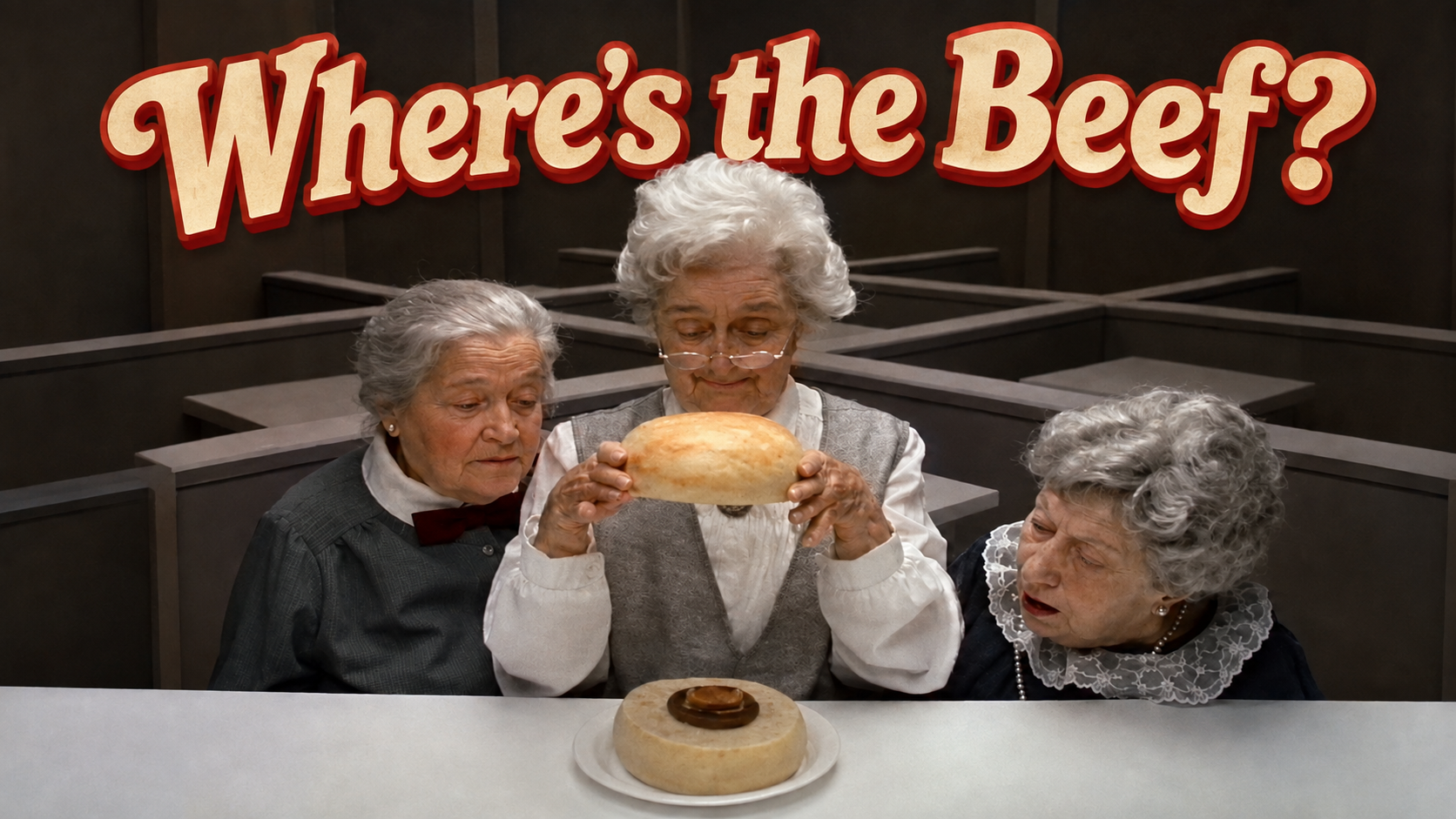
Where’s the beef?
The most immediate risk for Los Angeles is its worsening fiscal picture. The city is projecting a $209 million year‑end overspend and its Reserve Fund is down to 5.29%, barely above the legal minimum.
Both candidates are campaigning in a city facing a serious fiscal threat, yet in the debate neither one addressed it. Their silence suggests they are more comfortable debating symptoms than confronting the structural problem beneath them. Homelessness, policing, governance, and infrastructure all depend on fiscal stability, but neither candidate treated the budget crisis as the foundation on which every other promise rests.
Where’s the beef?
Public safety and policing have been focal points for years. The city is trying to hire 510 new officers to reach a target of 8,555, with a long‑term goal of 9,500, but recruitment and retention remain difficult. Response times and visible staffing remain public concerns.
Bass defended her record but did not explain how she would address recruitment, improve response times, or strengthen public safety. Her tone was defensive and accusatory, and she offered no clear plan to increase LAPD staffing or solve the department’s retention problems.
Raman said she supported budgets that expanded the police force and opposed only a contract she argued would bankrupt the city. She faulted Bass for negotiating raises Los Angeles could not afford, but she did not explain how she would improve recruitment, strengthen public safety, or reform policing. Her critique focused on management, not a public safety solution.
Once again, another act of diagnosis without treatment.
Where’s the beef?
A major issue has become the city’s infrastructure deterioration. Street and sidewalk repairs are desperately needed, and the absence of streetlighting repair has created public safety concerns. In fact, all basic services are under strain.
Bass did not address the pothole surge, sidewalk backlog, streetlighting failures, or decades of deferred maintenance Angelenos encountered every day. The debate gave her an opportunity to explain how she would repair the city’s physical backbone, but she did not offer a solution, leaving one of Los Angeles’s most visible system failures unmentioned.
Raman also failed to address the city’s deteriorating infrastructure. If she had a solution, she did not offer it. The debate gave her a clear chance to explain how she would repair one of Los Angeles’s most gnawing issues, but she left that opportunity unused.
Once again, both candidates seemed more willing to debate urgent-sounding issues than confront the systems that determine whether the city actually works. It is difficult to imagine mayoral candidates failing to address one of Los Angeles’s most visible problems.
Where’s the beef?
Runaway Hollywood productions also emerged as a central debate issue. Raman argued that Los Angeles is no longer “film friendly,” blaming Bass for failing to reduce red tape or coordinate city and county agencies. Bass defended her record, but the exchange underscored that Hollywood’s exodus reflects deeper bureaucratic dysfunction and challenges the city’s future economic leadership.
However, we didn’t hear a word about the most obvious answers: runaway productions need specific steps to be taken, beginning with the creation of a single, unified permitting portal, eliminating neighborhood‑specific restrictions and appointing a film commissioner. The LAT headline a few days ago read: " Lights, camera, inaction: L.A.`s movie exodus"
Where’s the beef?
Bass did not make a strong case for re-election in the debate because she offered justification, not vision. She never articulated a second‑term agenda or explained how she would tackle the city’s worsening fiscal picture, its deteriorating infrastructure, or its rising unsheltered homelessness. She offered numerous defensive claims, not a re‑election argument.
Raman has claimed that she was the agent of change but did not make that stick in the debate. She presented herself as urgent, capable, and focused, but offered no citywide plan, avoided Los Angeles’s most serious risks, and did not explain how she would reform the systems that shape city government. Her performance delivered criticism, not transformation; diagnosis, not treatment; district-level examples, not citywide authority. The debate revealed her governing outlook, but not the leverage needed to reshape Los Angeles
In the debate Raman suggested a hope message that contrasted with Bass’s managerial tone. She urged everyone to raise their expectations. But hope is a belief about what is possible, it is not a plan for how to achieve it.
We asked, “Where’s the beef?” because the debate clarified some issues but offered little substance. The city’s deeper problem continues to be execution. Los Angeles does not lack plans; it lacks follow-through, decisions made, and outcomes delivered. Angelenos are not asking for more structure; they are asking for results.
(Nick Patsaouras is an electrical engineer, civic leader, and a longtime public advocate. He ran for Mayor in 1993 with a focus on rebuilding L.A. through transportation after the 1992 civil unrest. He has served on major public boards, including the Los Angeles Department of Water and Power, Metro, and the Board of Zoning Appeals, helping guide infrastructure and planning policy in Los Angeles. He is the author of the book "The Making of Modern Los Angeles.")