
LA Firefighters Just Declared War on City Hall — And Karen Bass May Be Walking Into a Political Inferno
THE BOTTOM LINE - Los Angeles firefighters almost never do this publicly.
They do not usually revolt against City Hall.
They do not usually openly accuse elected leaders of allowing the system to collapse.
And they certainly do not pool over $1 million of their own money to bypass politicians and go directly to voters.
But that is exactly what is happening now in Los Angeles.
In one of the most politically explosive warnings yet against Mayor Karen Bass, furious firefighters are sounding the alarm that the city’s emergency response system is approaching a dangerous breaking point, and they are making clear they believe City Hall failed to stop it.
The accusations are staggering.
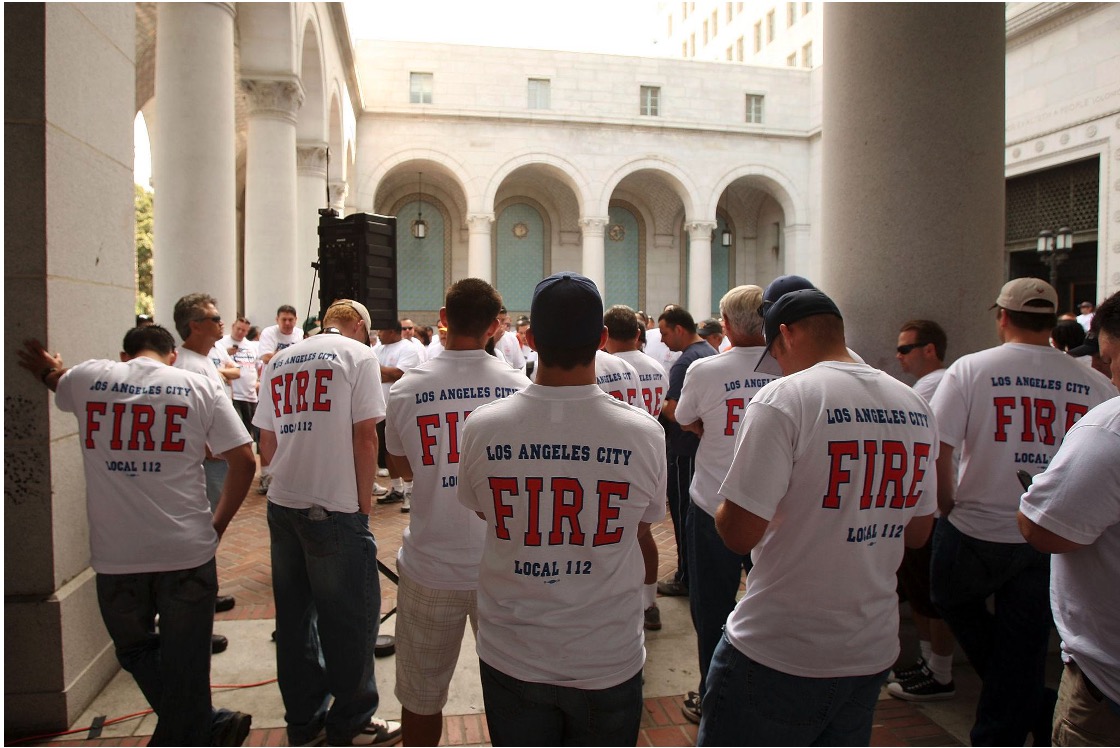
Firefighters say they are trapped in brutal overtime cycles, routinely forced into 48-hour shifts that can spiral into 72, 96, or even 120 straight hours on duty.
They describe crews running from CPR calls involving children to violent traffic crashes, drownings, structure fires, and medical emergencies without relief.
And amid all of it, some firefighters say they still are not even getting paid properly.
Missed paychecks. Delayed wages. Arbitration battles. Lawsuits. Grievances.
According to union leaders, firefighters across Los Angeles are collectively owed hundreds of thousands of dollars in unpaid compensation while continuing to work under extreme physical and emotional strain.
“The worst thing you can do is not pay your firefighters correctly,” said UFLAC Local 112 President Doug Coates.
“And that’s happening.”
That line alone should send shockwaves through Los Angeles politics.
Because this is no longer merely a labor dispute.
This is rapidly becoming a devastating public indictment of how City Hall manages one of the most critical public safety systems in America’s second-largest city.
And the numbers are politically catastrophic.
In 1960, Los Angeles had roughly 2.5 million residents.
Today, the city is approaching 4 million.
Yet over six decades, the Los Angeles Fire Department has added only eight firefighter positions.
Eight.
Meanwhile, emergency calls have exploded from roughly 100,000 annually in the 1960s to nearly 500,000 today.
Five times the workload.
Essentially the same staffing.
That is not sustainable government.
That is institutional neglect.
Even worse, the city actually has fewer fire stations today than it did generations ago. Many existing stations are more than 50 years old, while several are now over 80 years old.
Response times are deteriorating accordingly.
National standards recommend emergency crews arrive within approximately four minutes in most incidents.
Los Angeles now averages nearly eight minutes.
Inside dispatch centers, firefighters describe computer screens turning red because no nearby units are available to respond something they say is becoming increasingly common.
Translation?
Entire neighborhoods can temporarily be left without immediate emergency coverage while crews are pulled from farther away to fill gaps.
“It’s a domino effect,” Coates warned.
And voters should understand exactly what that means.
In a major earthquake, wildfire, civil emergency, or large-scale disaster, domino effects kill people.
That is why this political rebellion by firefighters matters so much.
Because firefighters are traditionally viewed by the public as among the most trusted voices in government.
They are not ideological activists.
They are not partisan operatives.
And they are usually extremely cautious about publicly attacking elected officials.
But now they are effectively warning that Los Angeles is operating with a dangerously overstretched emergency response system while City Hall continues insisting progress is being made.
That contradiction could become politically devastating for Bass.
Especially after a wildfire season that already intensified scrutiny over Los Angeles’ emergency preparedness, infrastructure vulnerabilities, staffing levels, and crisis management capabilities.
Now firefighters themselves are openly warning the system is breaking.
And rather than waiting for politicians to act, they are going directly to taxpayers with a proposed half-cent sales tax designed to inject roughly $324 million annually into the department.
The fact that firefighters believe they must effectively rescue the fire department themselves is an extraordinary political statement.
It signals a complete collapse of confidence in City Hall’s willingness or ability to solve the crisis internally.
Bass’ office argues these problems were decades in the making, and to be fair, that is true.
Los Angeles did not reach this point overnight.
Successive administrations ignored growing structural problems for years while the city expanded, emergency demands exploded, infrastructure aged, and staffing failed to keep pace.
But voters rarely care who started the fire politically.
They care who is holding the hose when the system fails.
And increasingly, angry firefighters are making clear they do not believe City Hall is moving fast enough to stop what they see unfolding.
That may become one of the most dangerous political developments yet for Karen Bass.
Because once firefighters publicly lose confidence in leadership, voters often follow right behind them.
(Mihran Kalaydjian is a seasoned public affairs and government relations professional with more than twenty years of experience in legislative affairs, public policy, community relations, and strategic communications. A respected civic leader and education advocate, he has spearheaded numerous academic and community initiatives, shaping dialogue and driving reform in local and regional political forums. His career reflects a steadfast commitment to transparency, accountability, and public service across Los Angeles and beyond.)