
Paper Waste Could be Made into Eco-Friendly Bricks
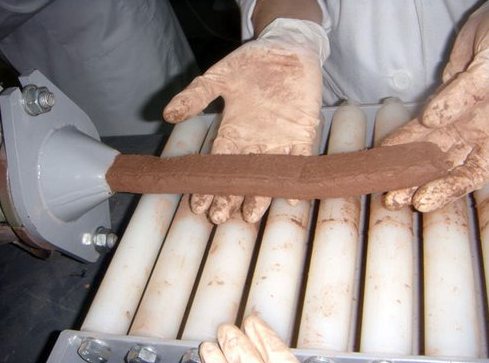 Researchers from Spain’s University of Jaen have found a way to make a greener version of one of the most ubiquitous building materials: bricks. Using waste material from paper mills, they were able to create a brick that not only diverts waste from going to a landfill, but also requires less energy to produce.
Gizmag reports, "The scientists gathered cellulose waste from a paper mill, along with sludge left over from the purification process of that plant’s waste water. Those substances were then mixed with clay used in building construction, pressurized, and then extruded in one long sausage-like length. The bricks were subsequently sliced from that material, and fired in a kiln."
Researchers from Spain’s University of Jaen have found a way to make a greener version of one of the most ubiquitous building materials: bricks. Using waste material from paper mills, they were able to create a brick that not only diverts waste from going to a landfill, but also requires less energy to produce.
Gizmag reports, "The scientists gathered cellulose waste from a paper mill, along with sludge left over from the purification process of that plant’s waste water. Those substances were then mixed with clay used in building construction, pressurized, and then extruded in one long sausage-like length. The bricks were subsequently sliced from that material, and fired in a kiln."
The paper waste bricks need less time in the kiln than conventional bricks, which saves energy and money. The paper bricks also have low thermal conductivity, which means they would be good insulators for a building so energy would be saved once they were used in a home or business too.
The test bricks were smaller than conventional ones at 3 x 1 x 6 cm, but the researchers were able to make ones too. The only downside right now is that the paper waste bricks aren't quite as strong as their full-clay counterparts, though their mechanical resistance was above the legal minimum necessary for being used as a building material.
The researchers will now focus their attention on making the bricks stronger and some possibile ideas are to add materials from other waste streams like from beer, olive or biodiesel industries, or sewage sludge.